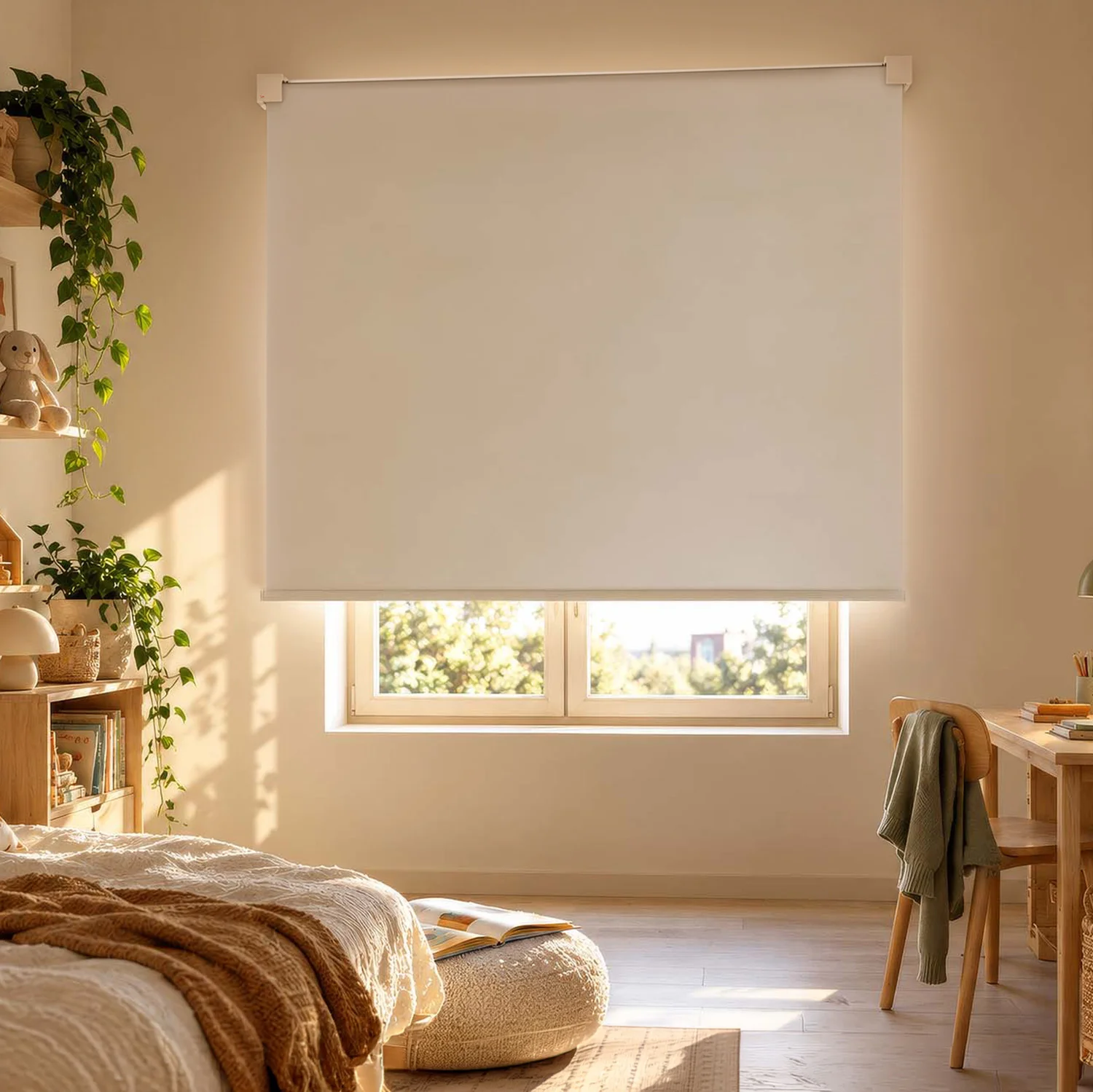
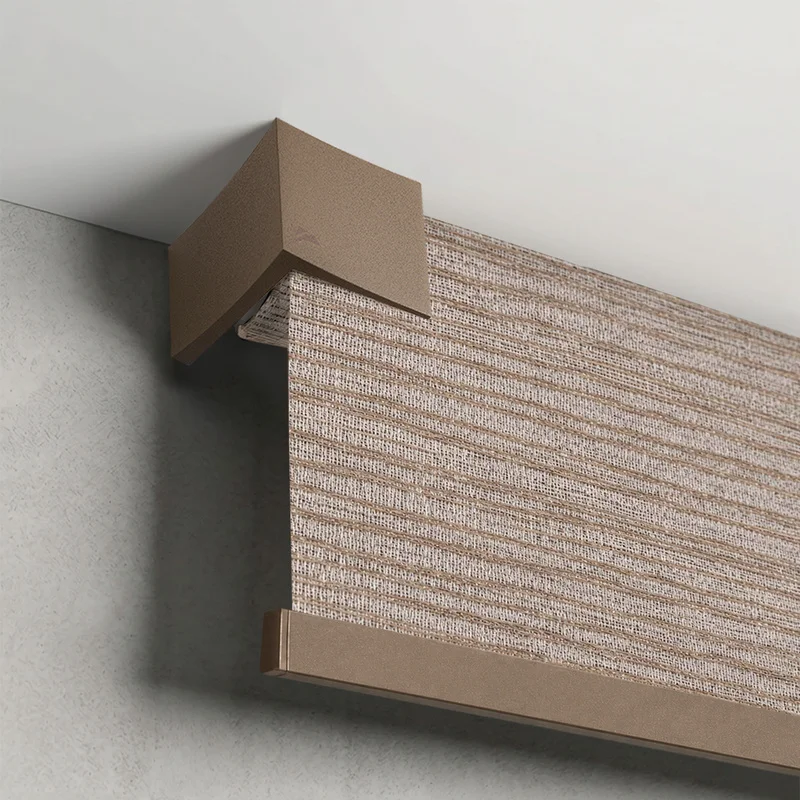
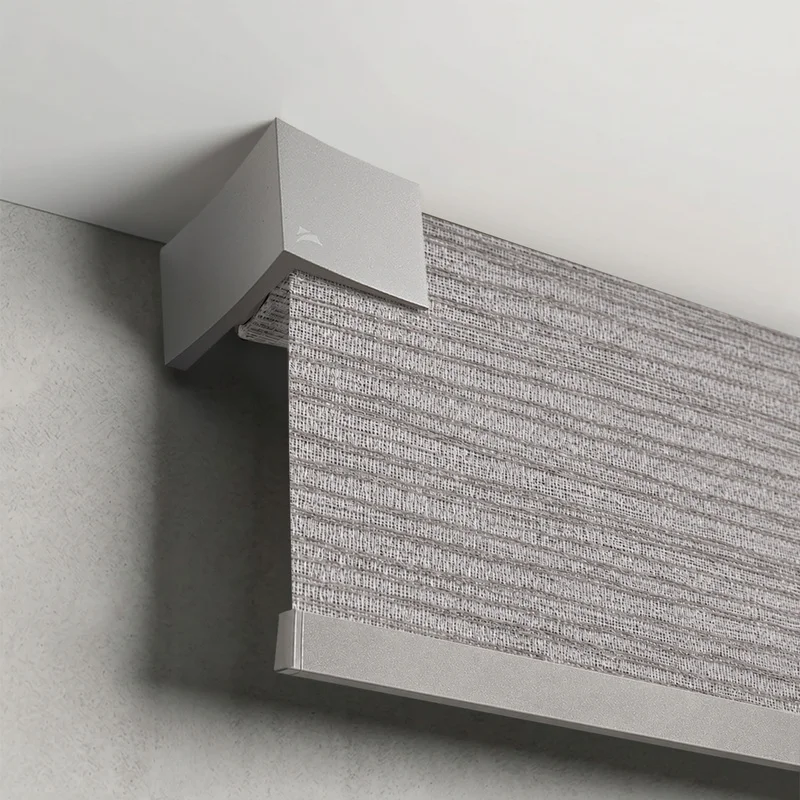
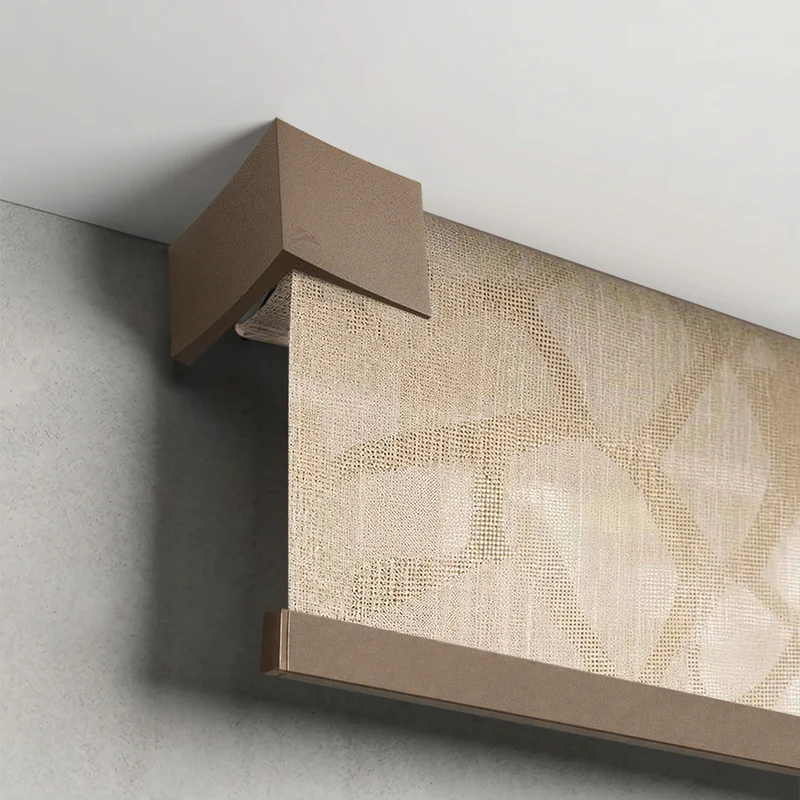
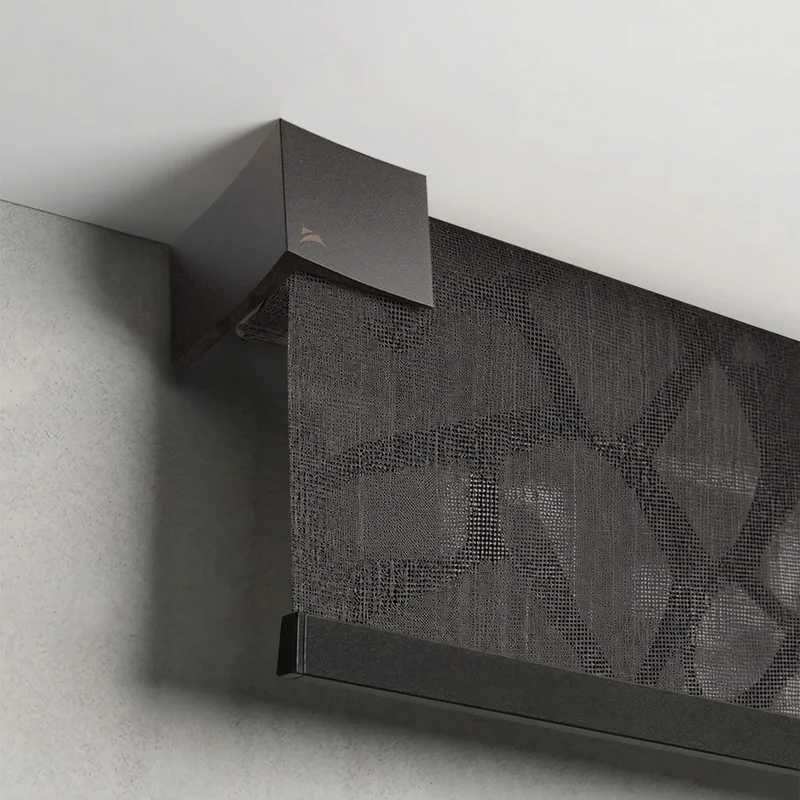
Configure your shade sail online
Design, shape, fabric. Ready in 5 days.
Learn more
FIXED SHADE SAILS
ROLL-UP SHADE SAILS
OUTLET & ACCESSORIES
SAILS BY SHAPE
BUYING GUIDE
INSTALLATION GUIDE
APPLICATIONS
BUYING GUIDE
BUYING GUIDE
BUYING GUIDE
Shade sails
Buying guide · Indoor roller blinds
Reading time: 10 minutes
You choose an indoor roller blind by answering a few questions: how much light and privacy you need, what look you want for your window and how you want to operate the blind. This guide takes them one at a time for Kyma and Recta blinds. Once you know what you want, all that's left is to measure up.
QUESTIONS TO ASK YOURSELF
Before you look at fabrics and colours, think about what the blind needs to do in that room. Each answer takes you to a section of this guide.
Kyma and Recta are indoor roller blinds: they're fitted inside your home, on the wall or ceiling, and control the light and privacy in the room.
If your main aim is to keep the heat out, consider exterior roller shades. They're fitted outside the window and block the sun before it hits the glass, so the room stays cooler in summer.
FABRICS
The fabric decides how much light comes into the room and how much can be seen from outside. To choose, start with how you use the room: a bedroom usually needs darkness, a home office needs light that doesn't reflect on the screen, a kitchen needs as much light as possible.
The types differ in how much light they let in and how much you can see through the fabric. Privacy matters most in the evening, when the lights are on indoors and more can be seen from outside.
Tv: the percentage of light that passes through the fabric
To compare fabrics there's one figure to look at, Tv (light transmittance): the percentage of light that passes through the fabric. With Tv 0% no light gets in, and the higher the value, the brighter the room stays.

A sliver of light can get in at the edges
Blackout fabric blocks all light, but a roller blind doesn't seal the window completely: a few rays can get through the gap between the fabric and the window. To reduce this, fit the blind as close to the window as possible.
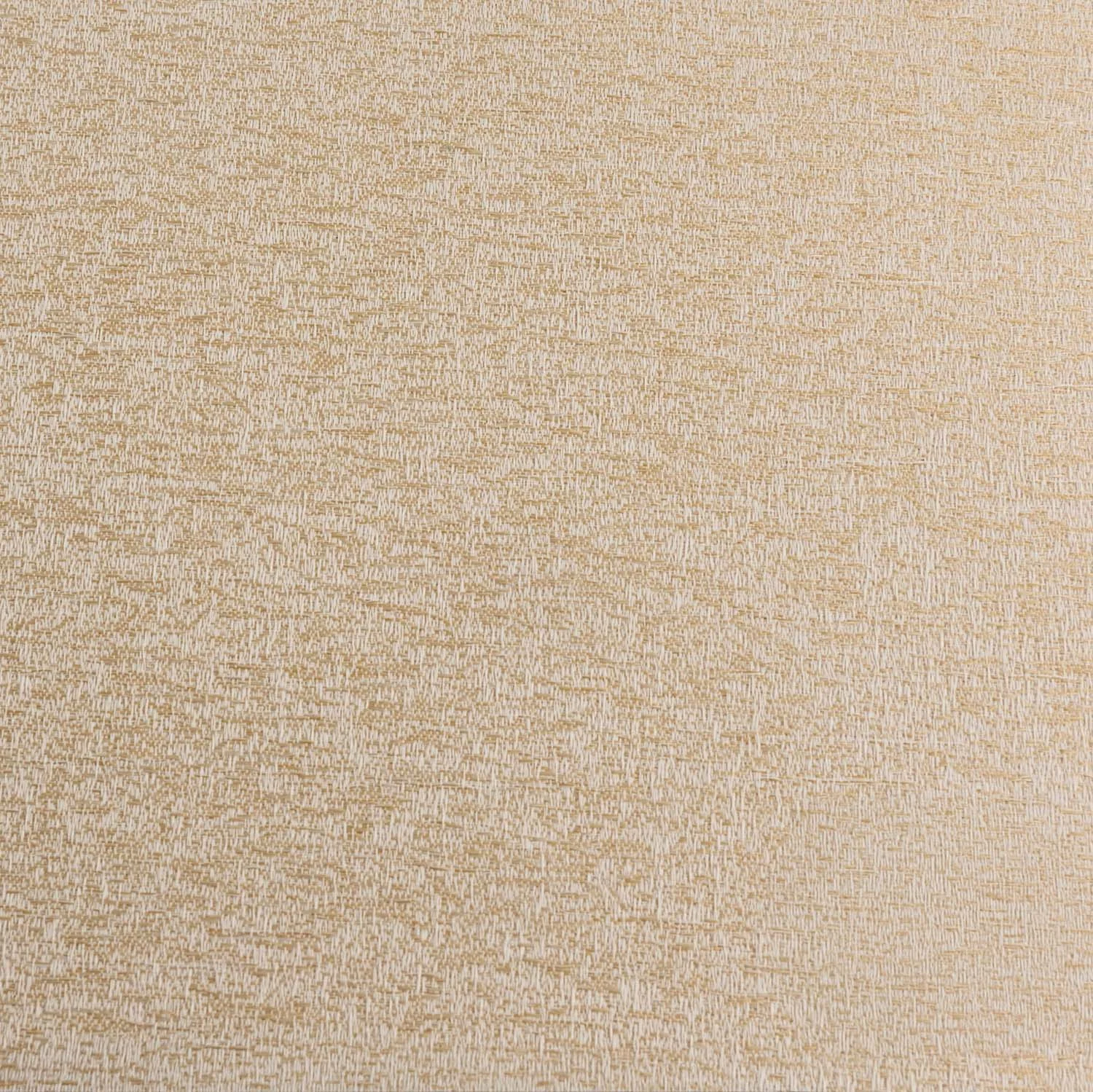
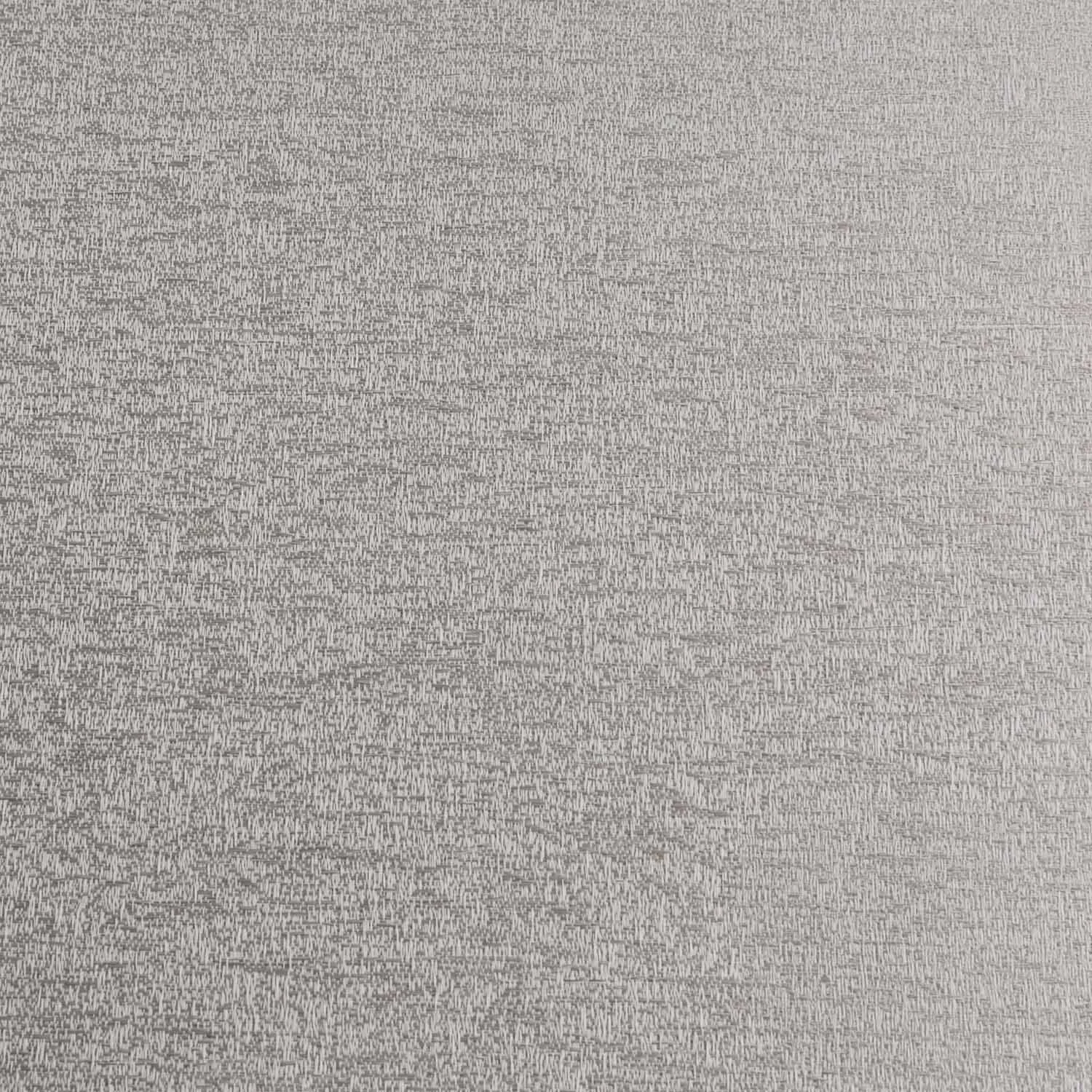
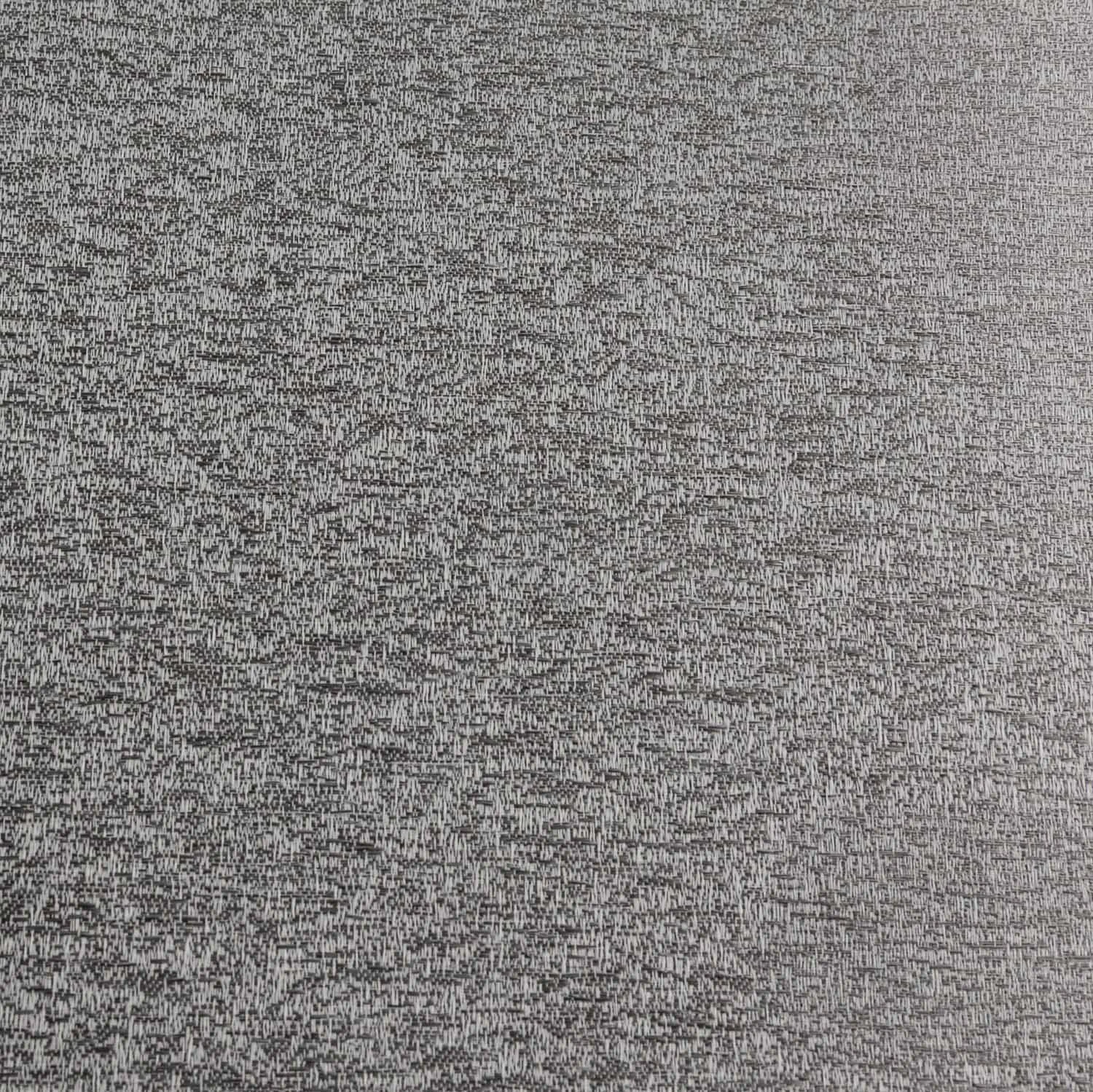
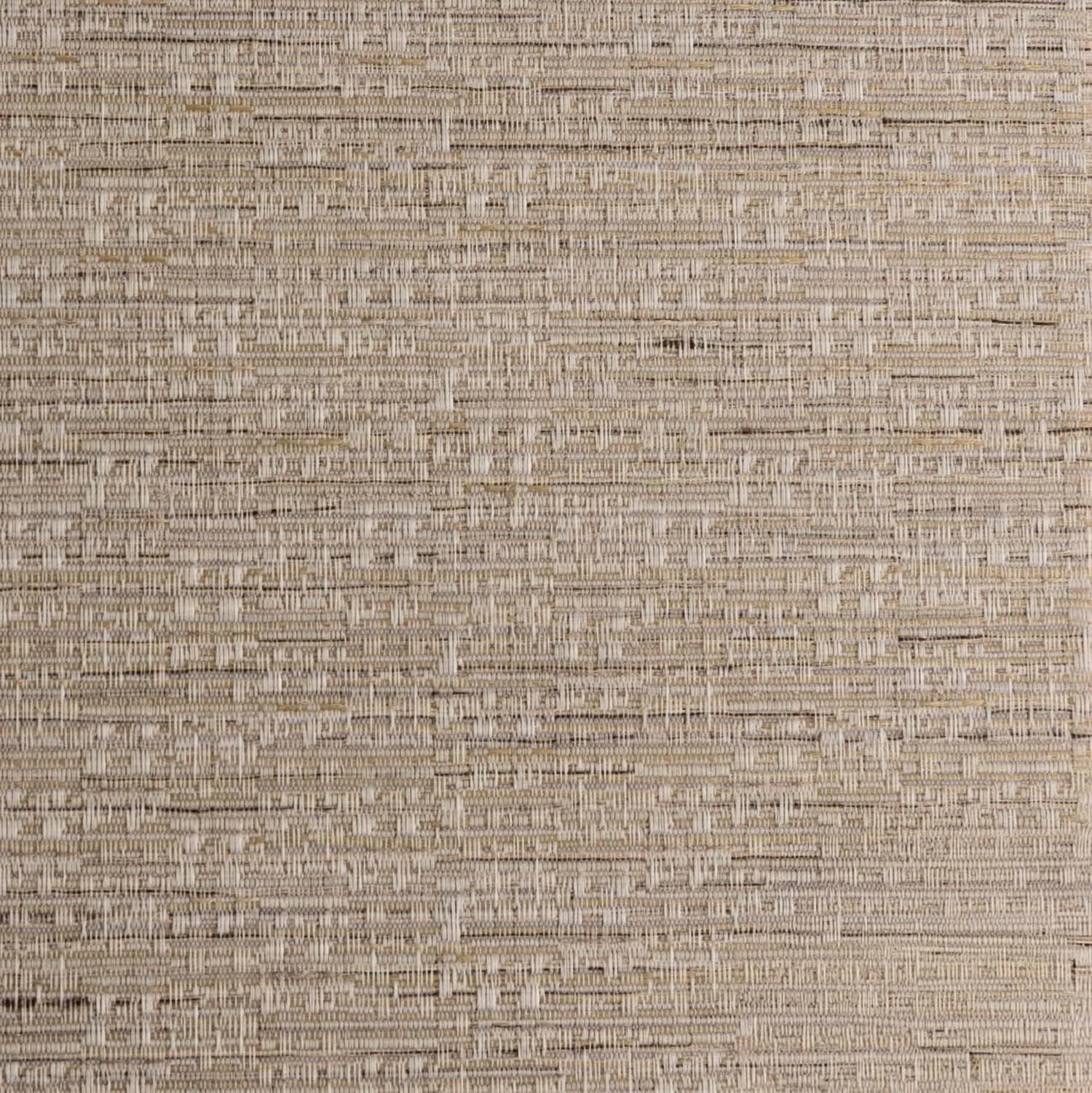
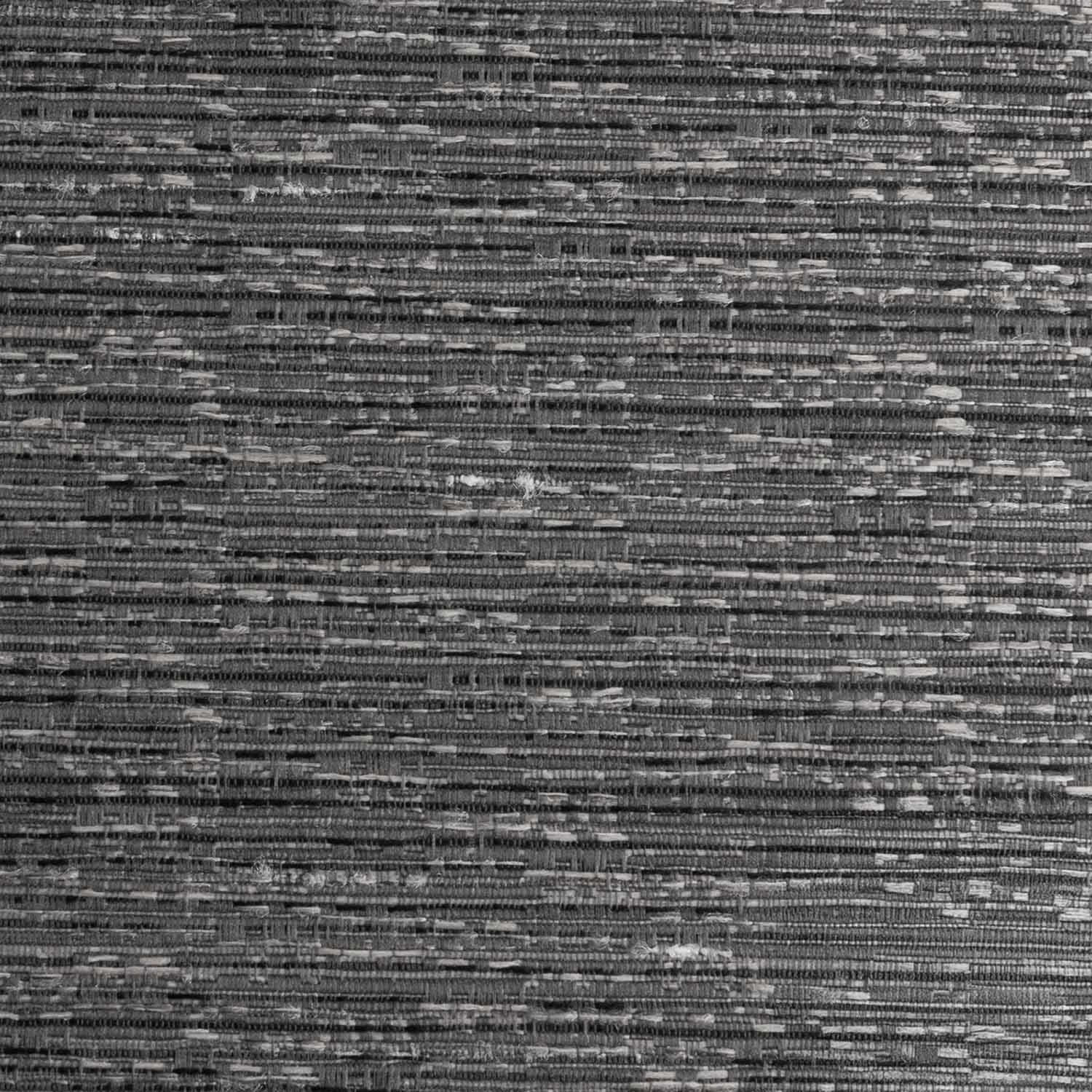
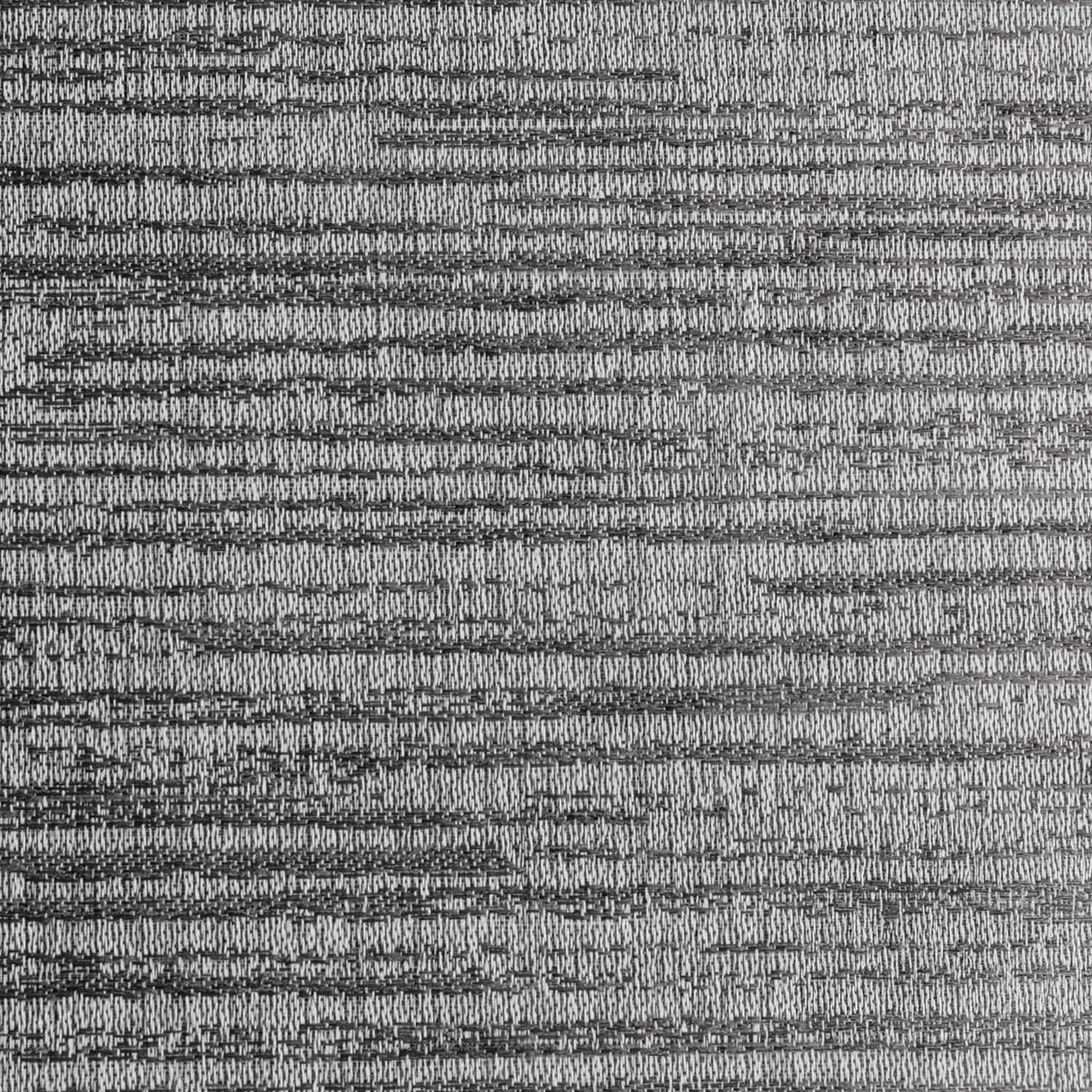
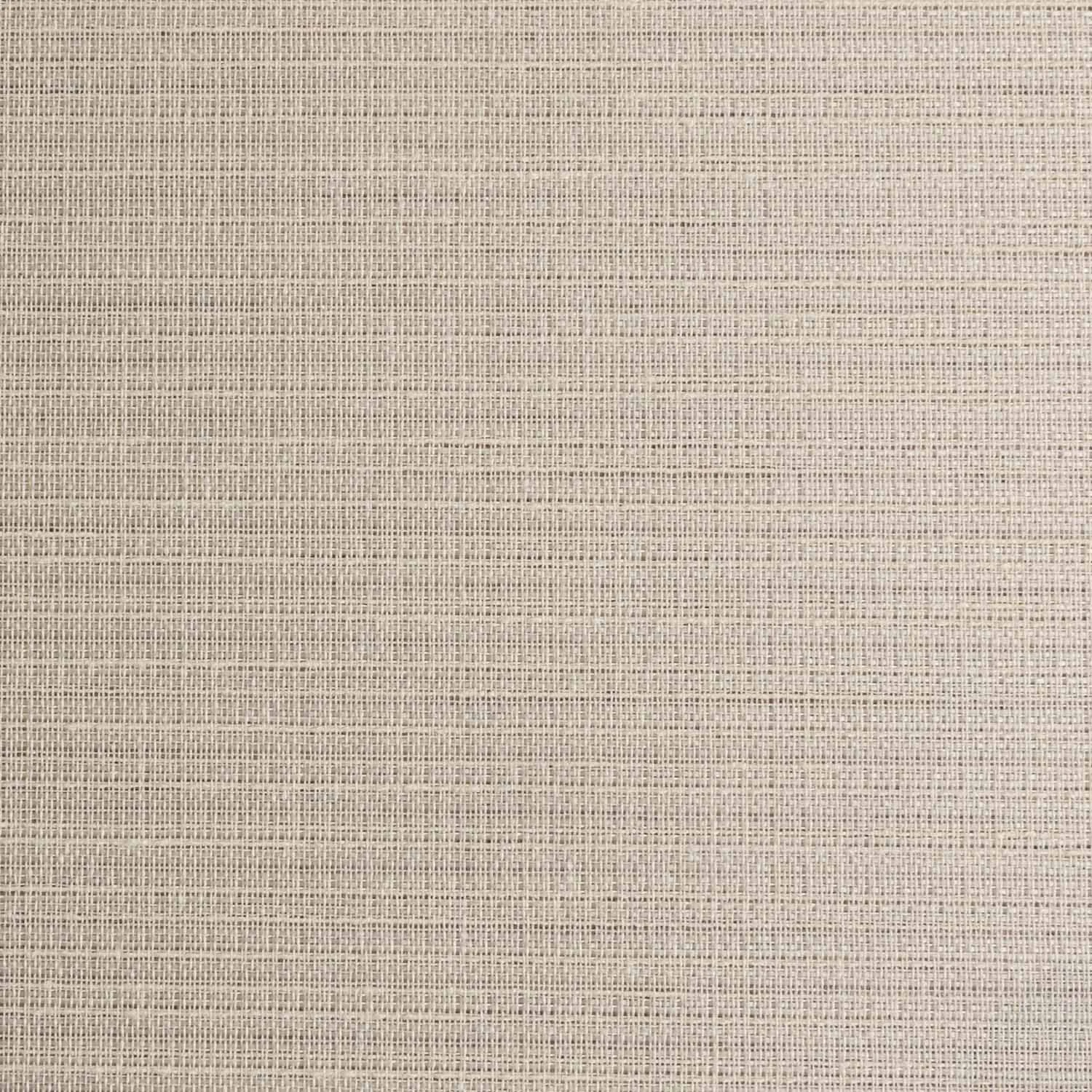
A soft surface with an irregular texture, similar to a natural fabric. It's the heaviest blackout fabric in the range (385 g/m²) and fully darkens the room (Tv 0%).

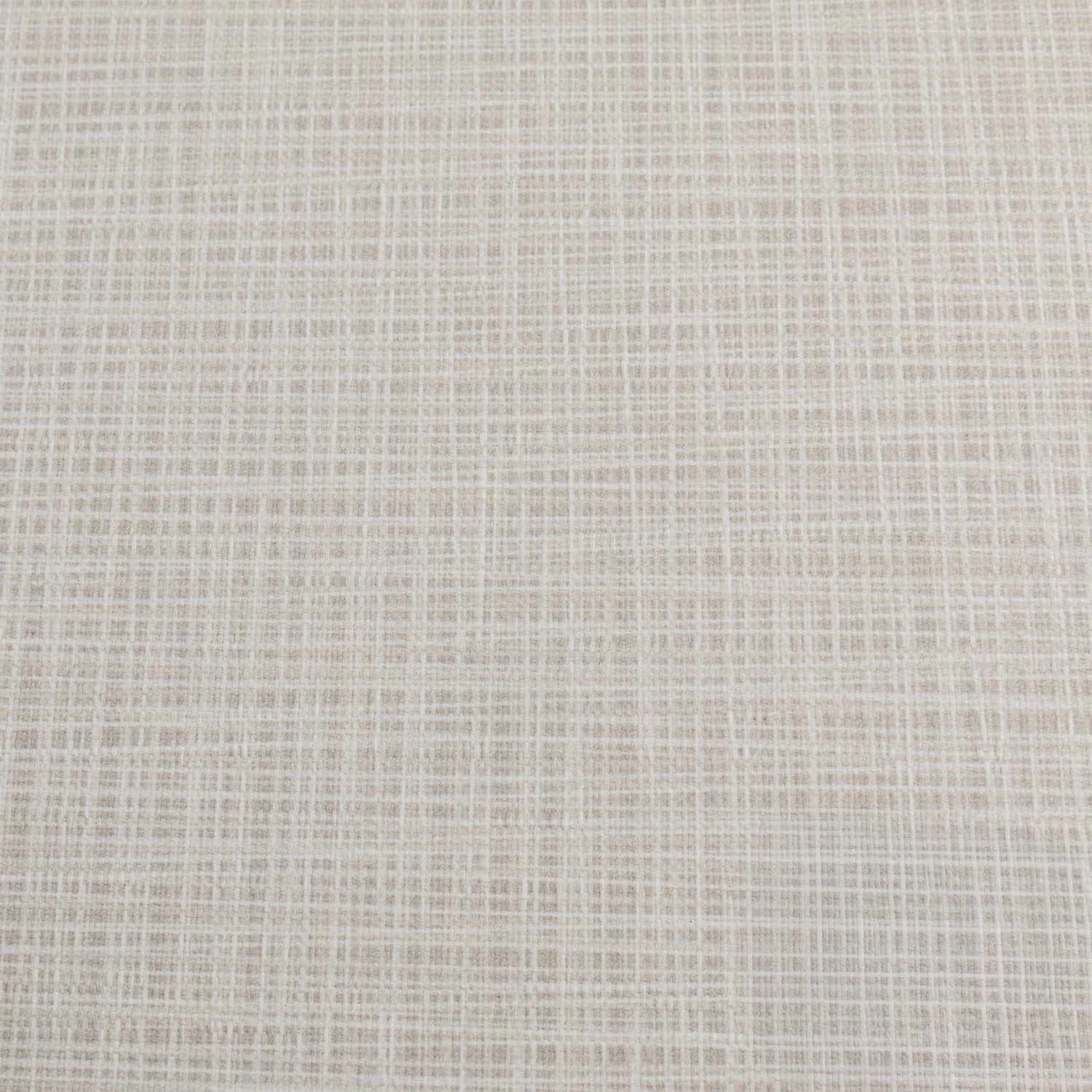
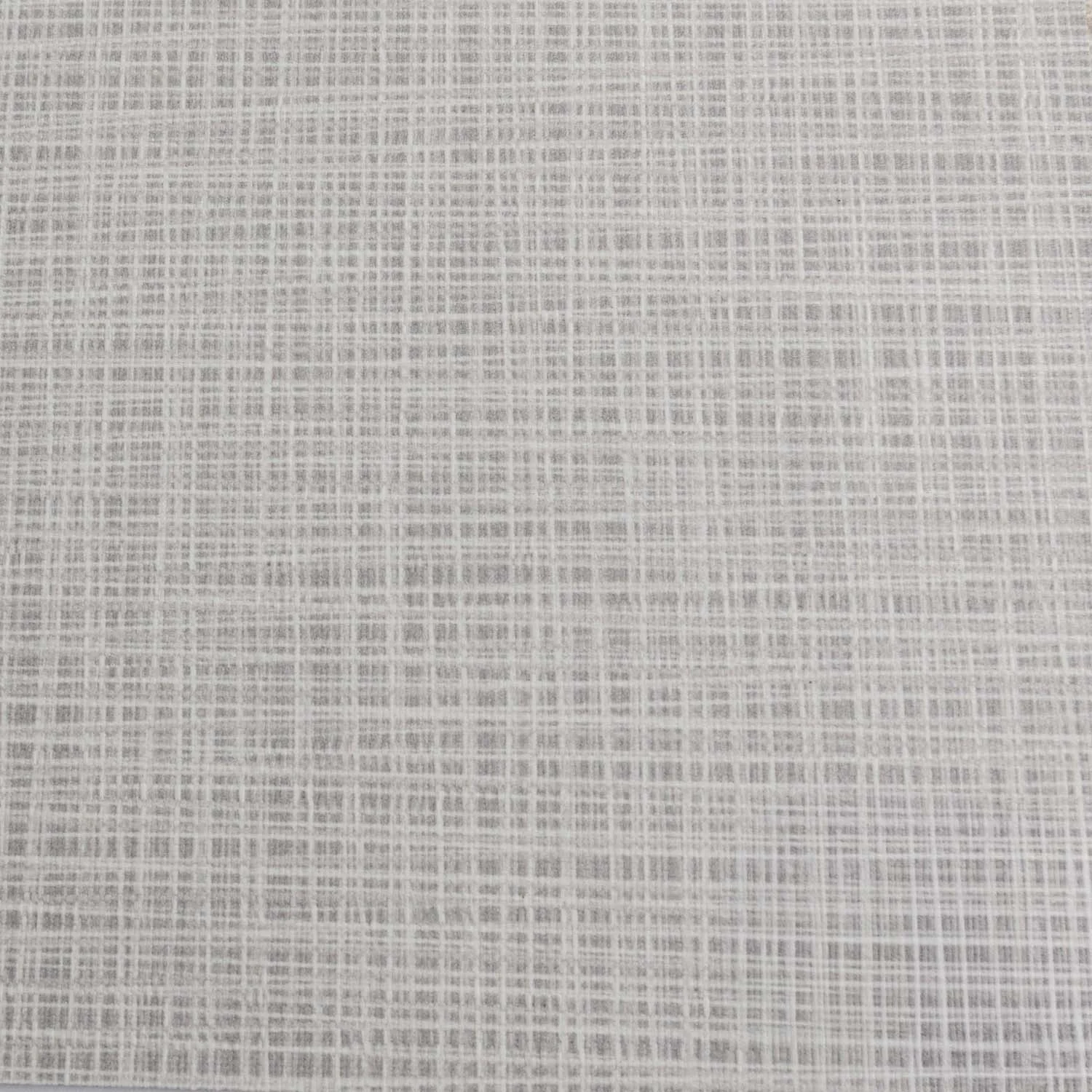
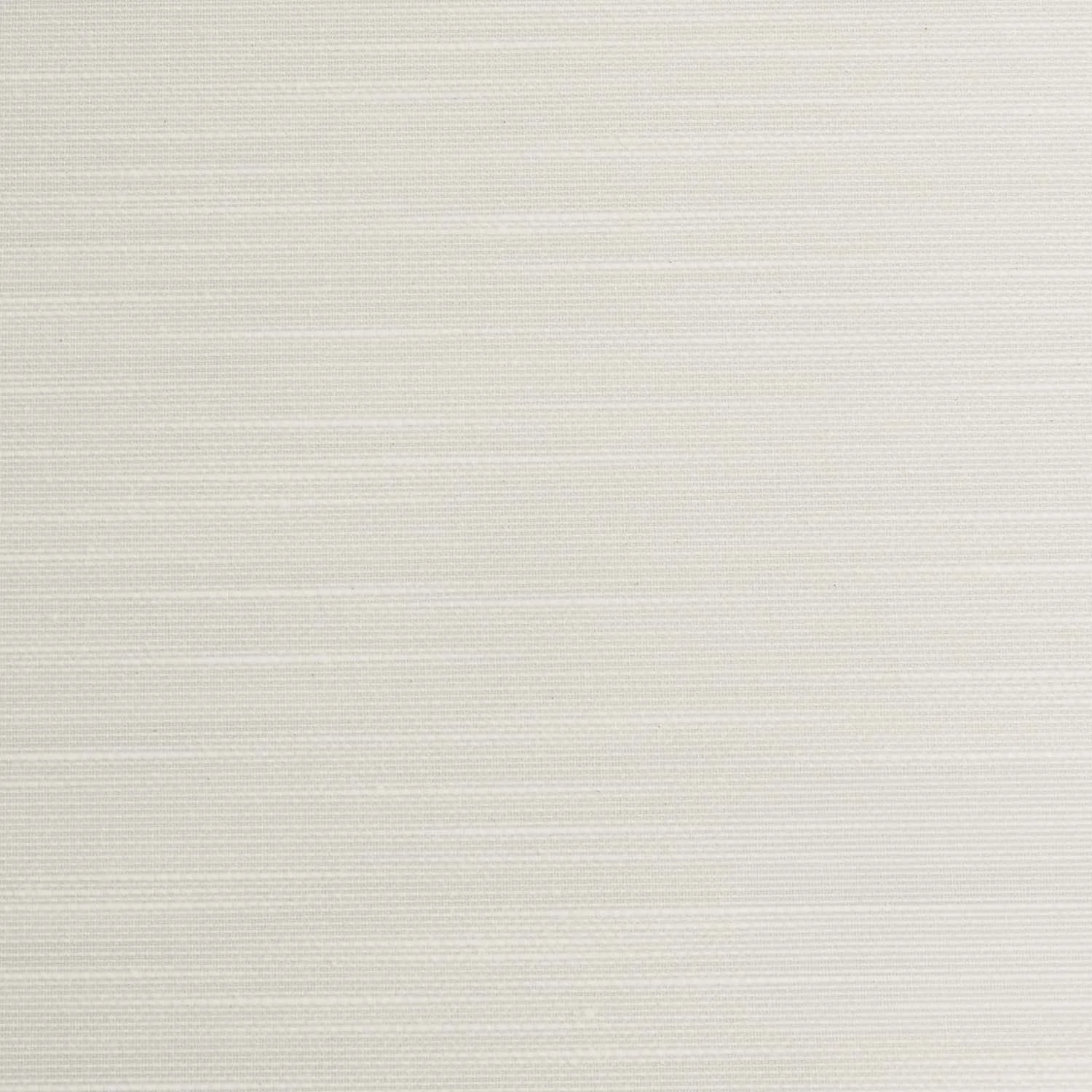
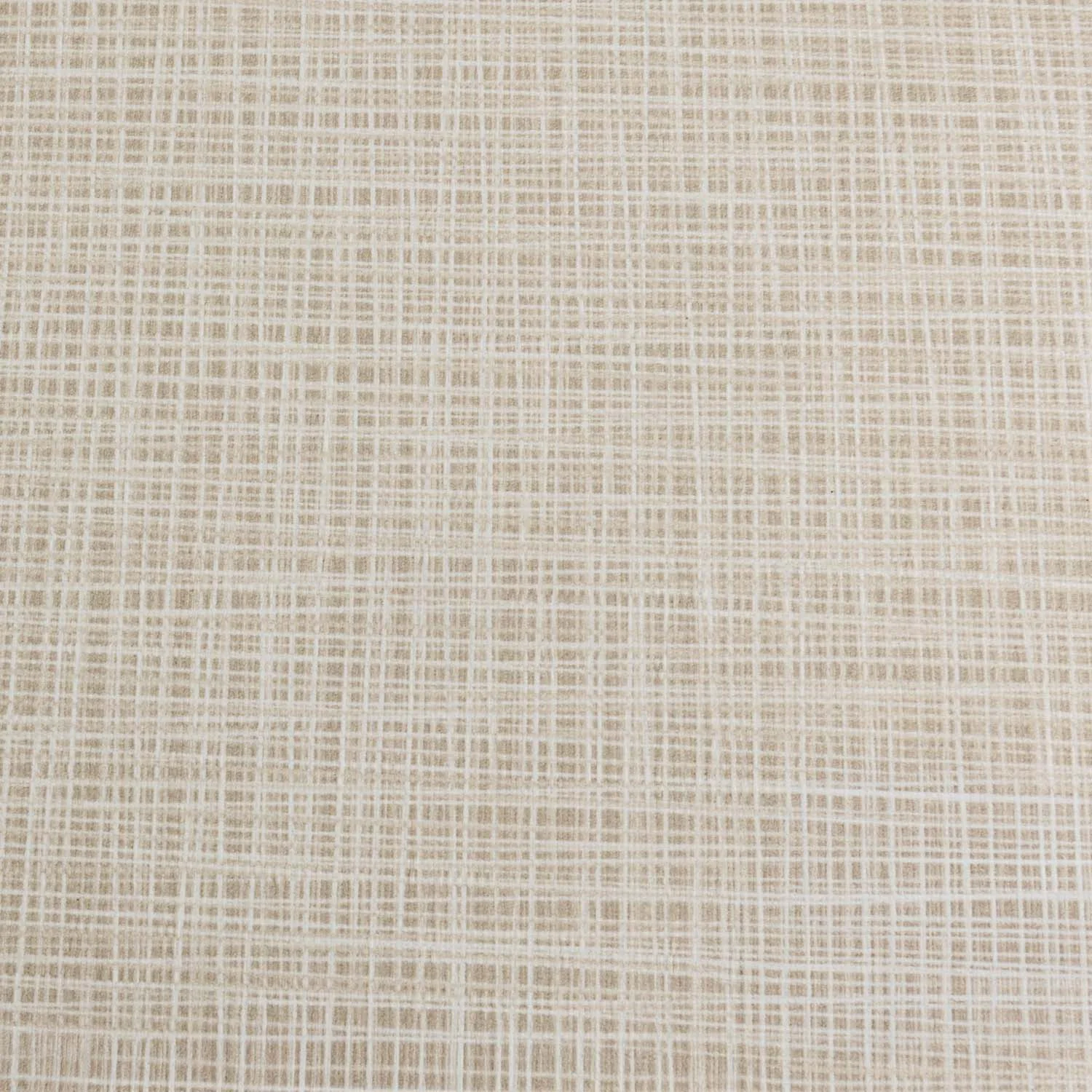
A regular weave reminiscent of painter's canvas. Lighter and thinner than Blend, with the same blackout performance (Tv 0%).
Tv does NOT change with colour
All our blackout fabrics have Tv 0%, whatever the colour.
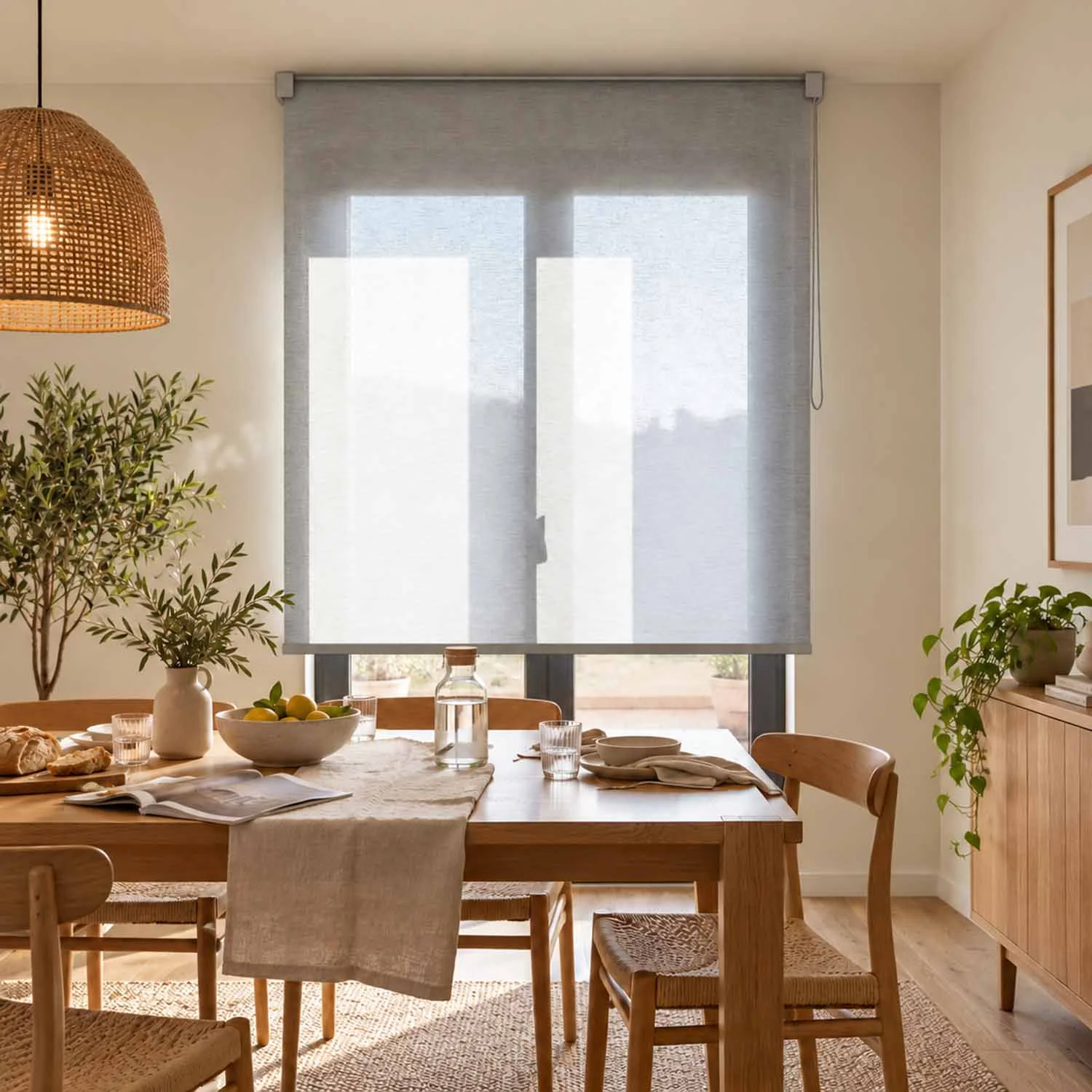
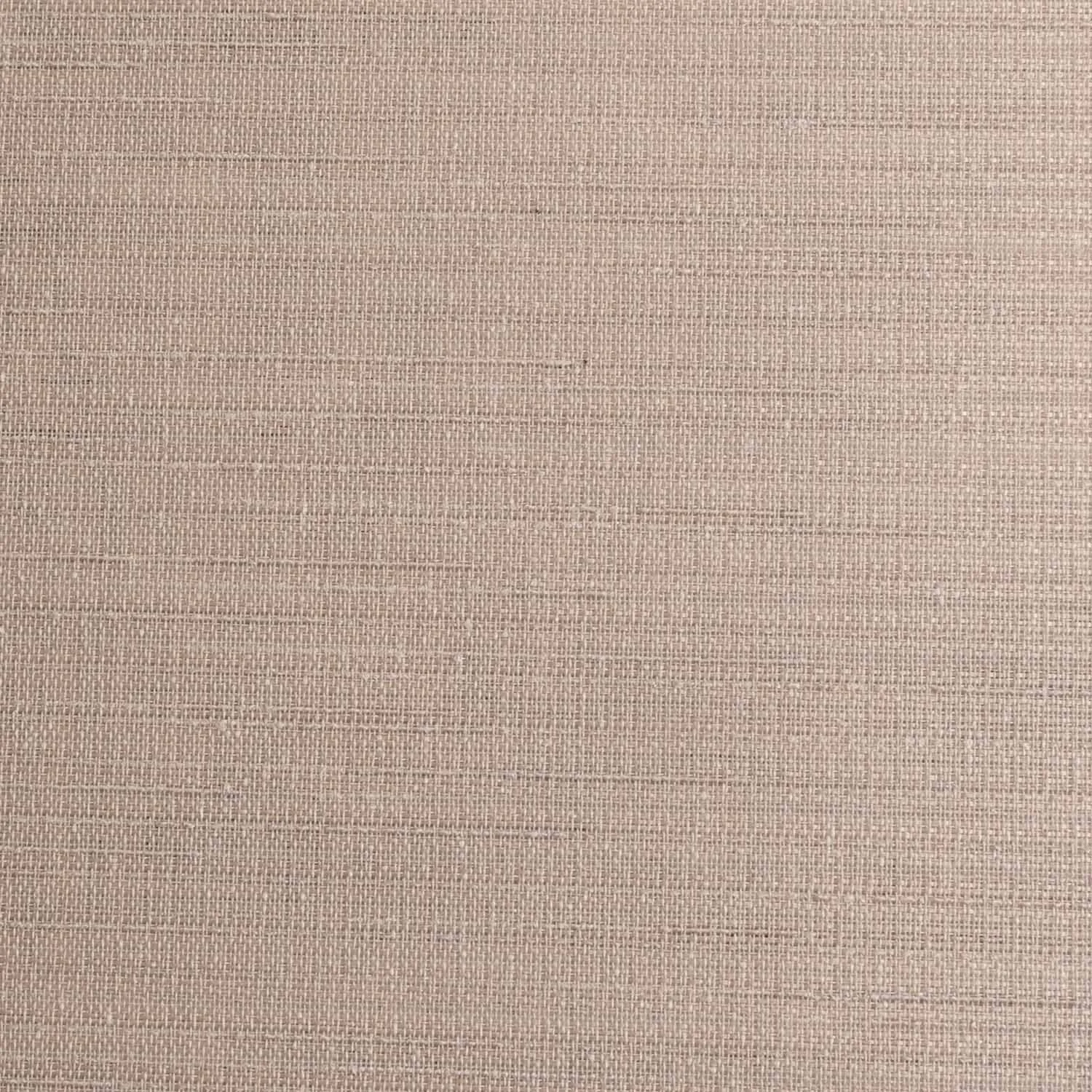
The only collection with natural fibre: 90% polyester, 10% cotton. A tactile texture and strong filtering: the room stays softly lit even in full daylight.
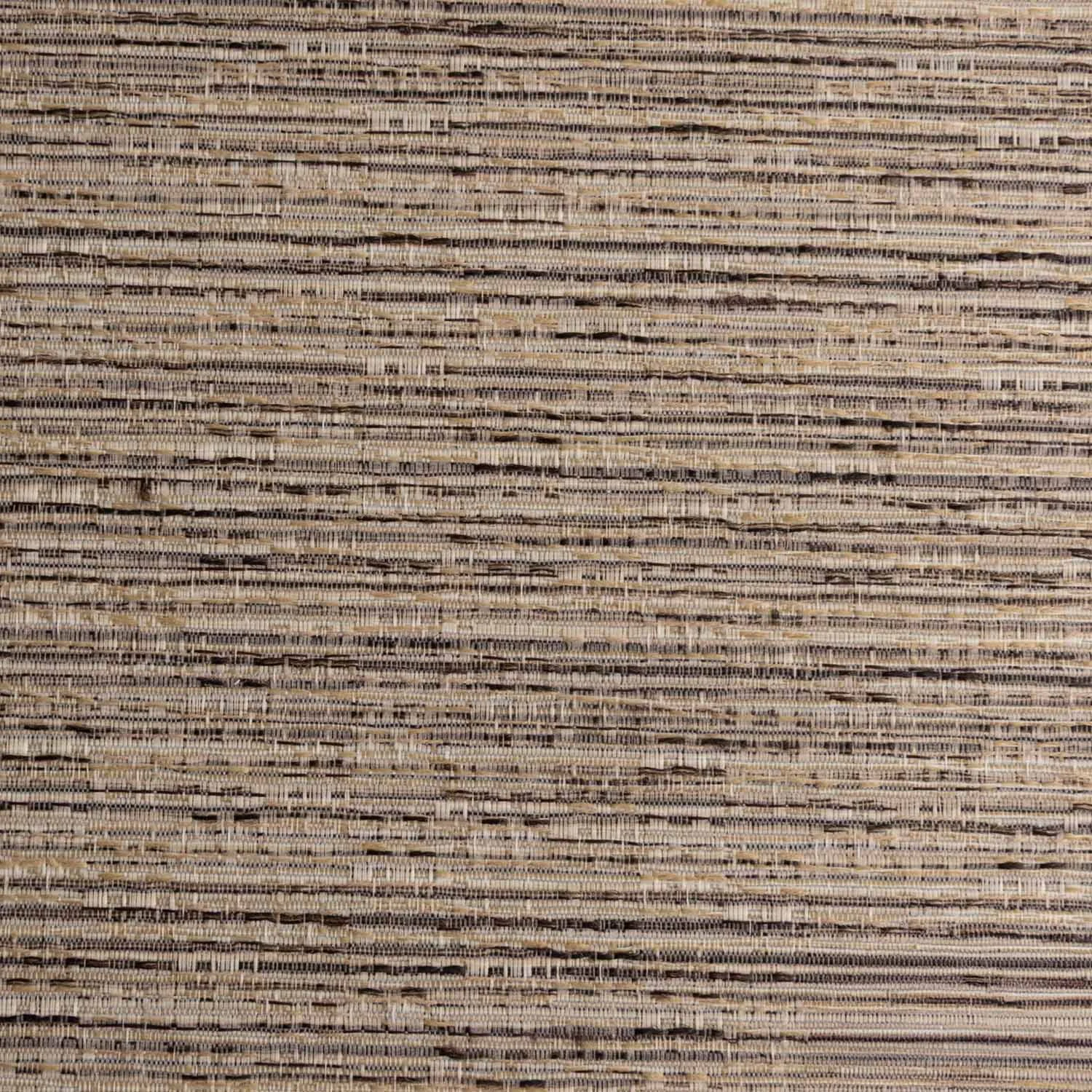
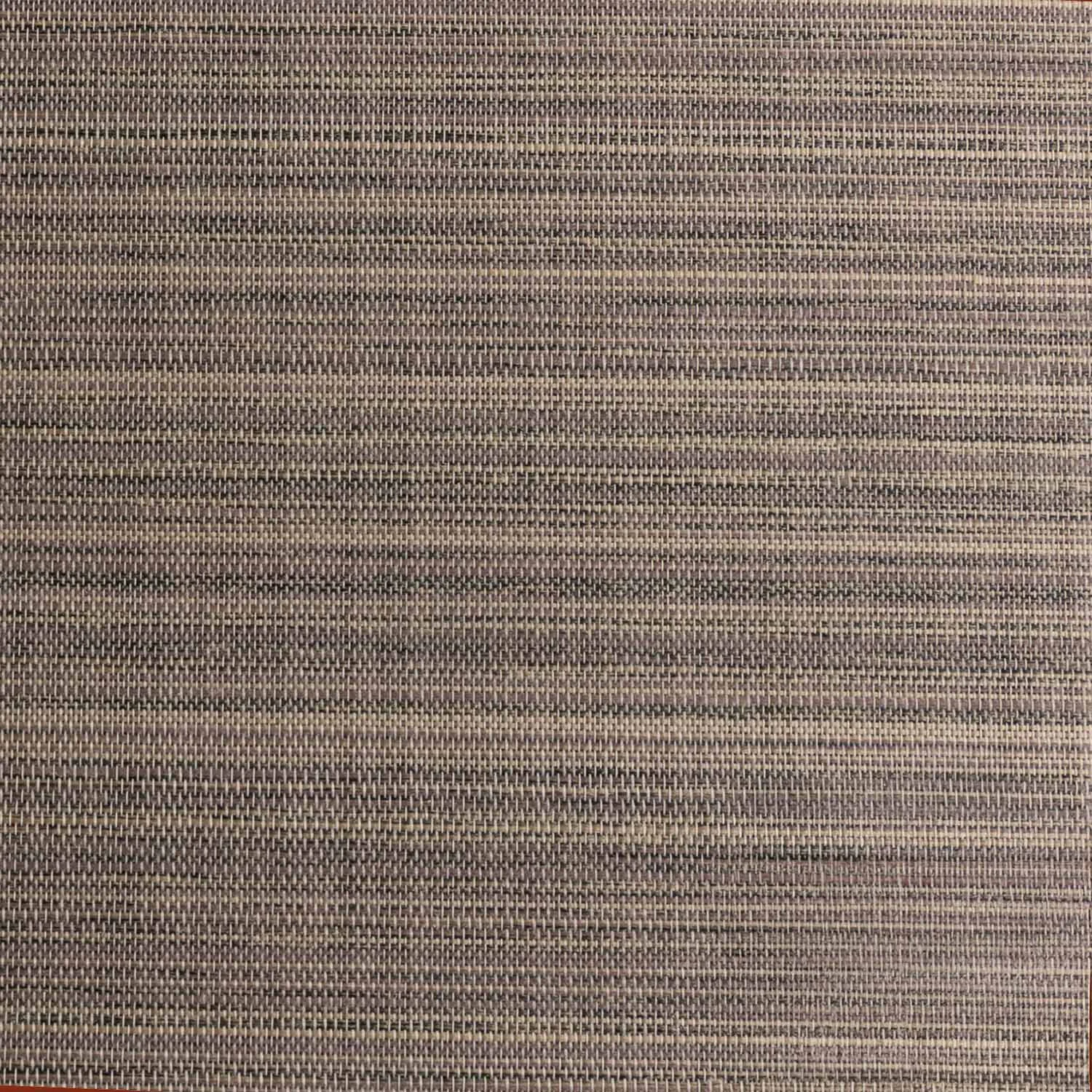
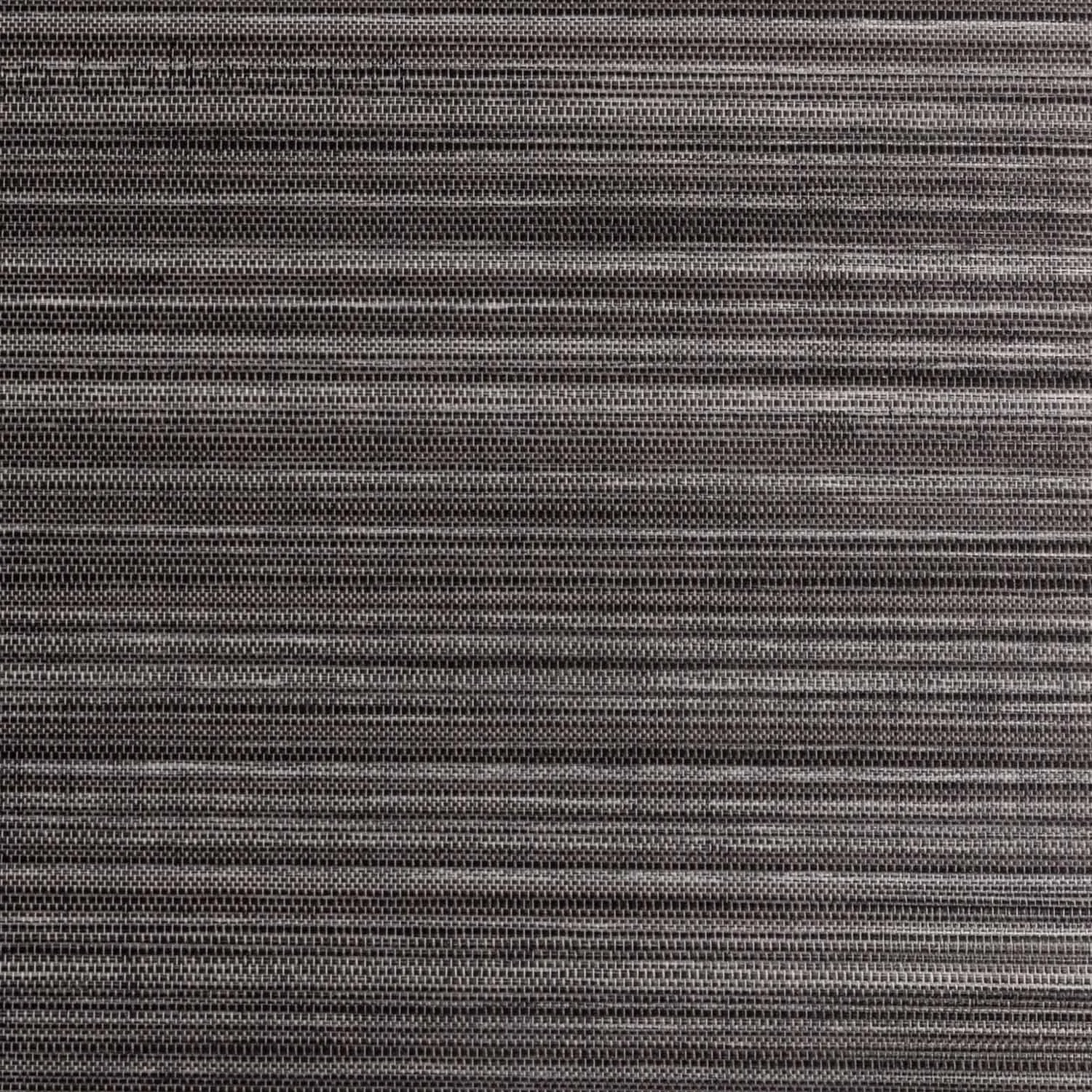
Fine horizontal stripes with a technical-fabric look. It's the thinnest light-filtering fabric (0.32 mm); darker colours filter more.

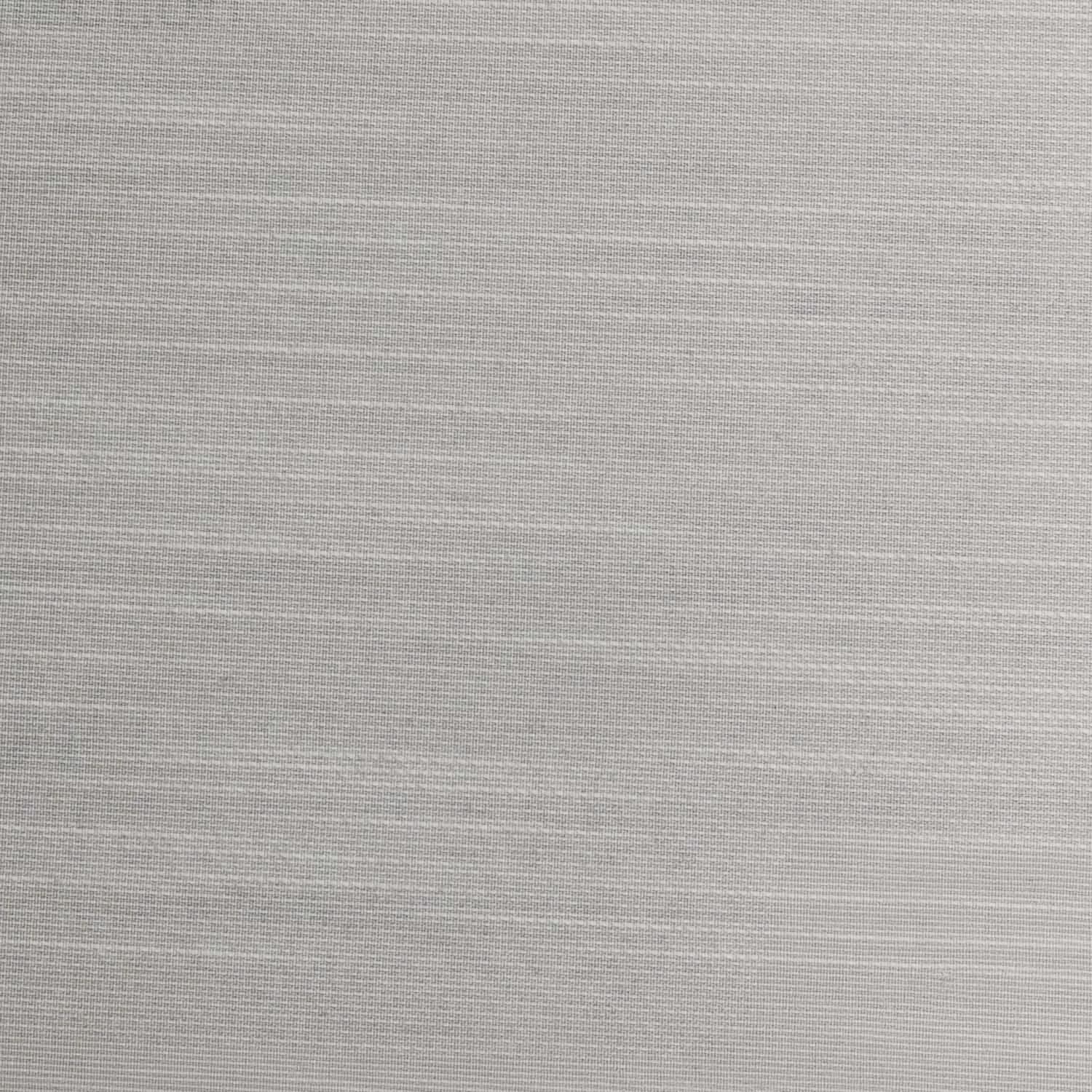
Fine stripes and a dense weave: it creates a discreet veil that screens direct views without blocking the light.
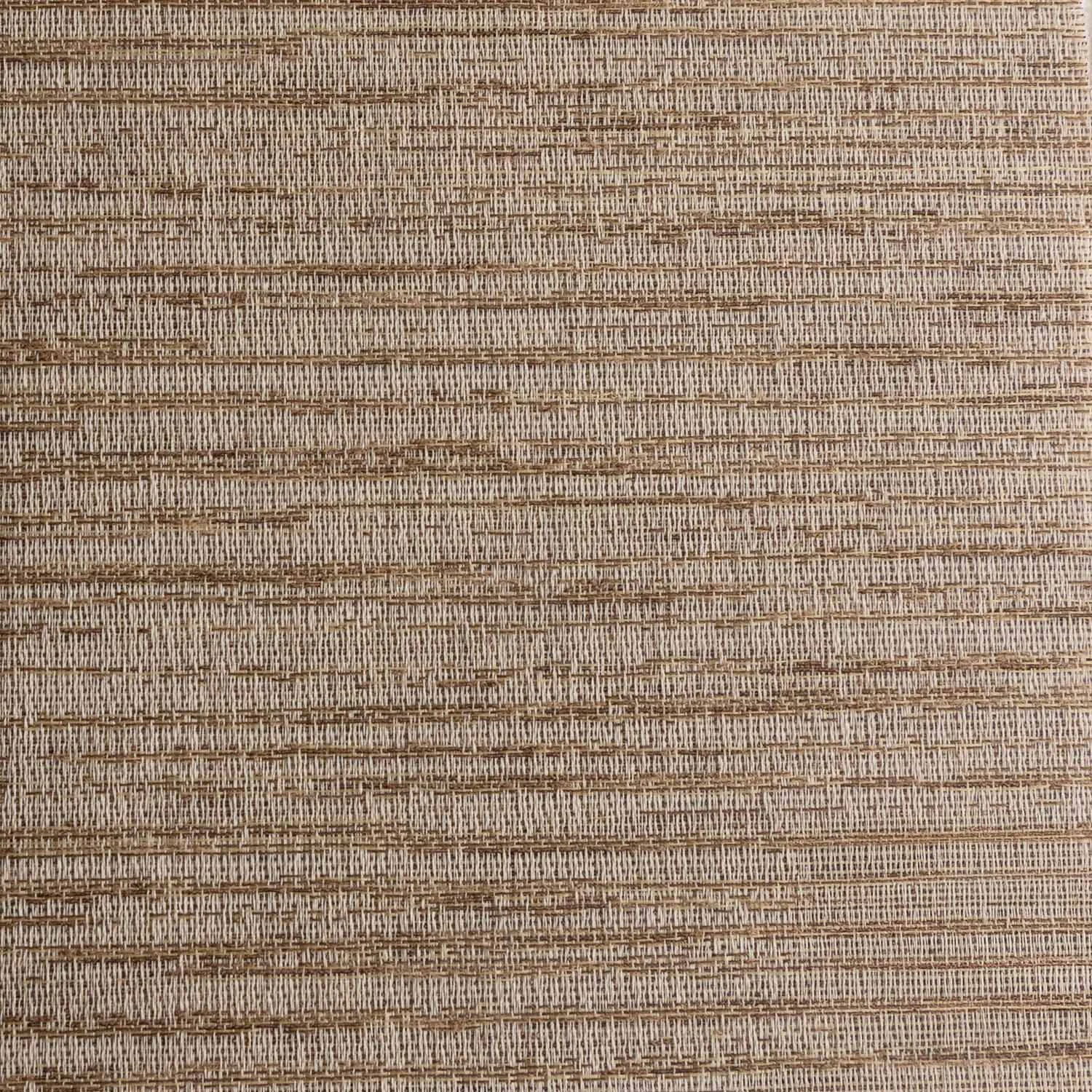
Tv changes with colour
Darker colours filter more, lighter colours let more light through.
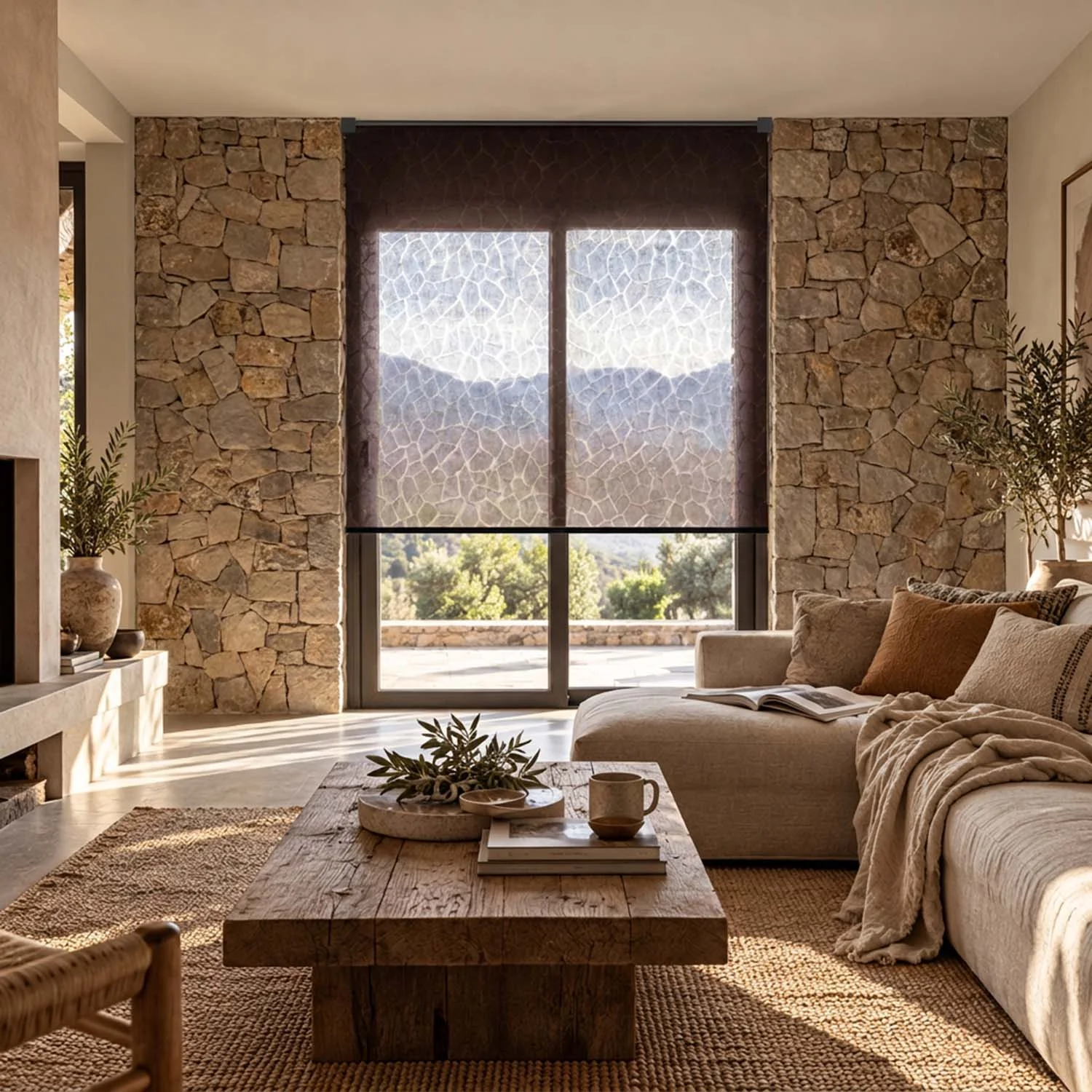
A fine veil between inside and outside
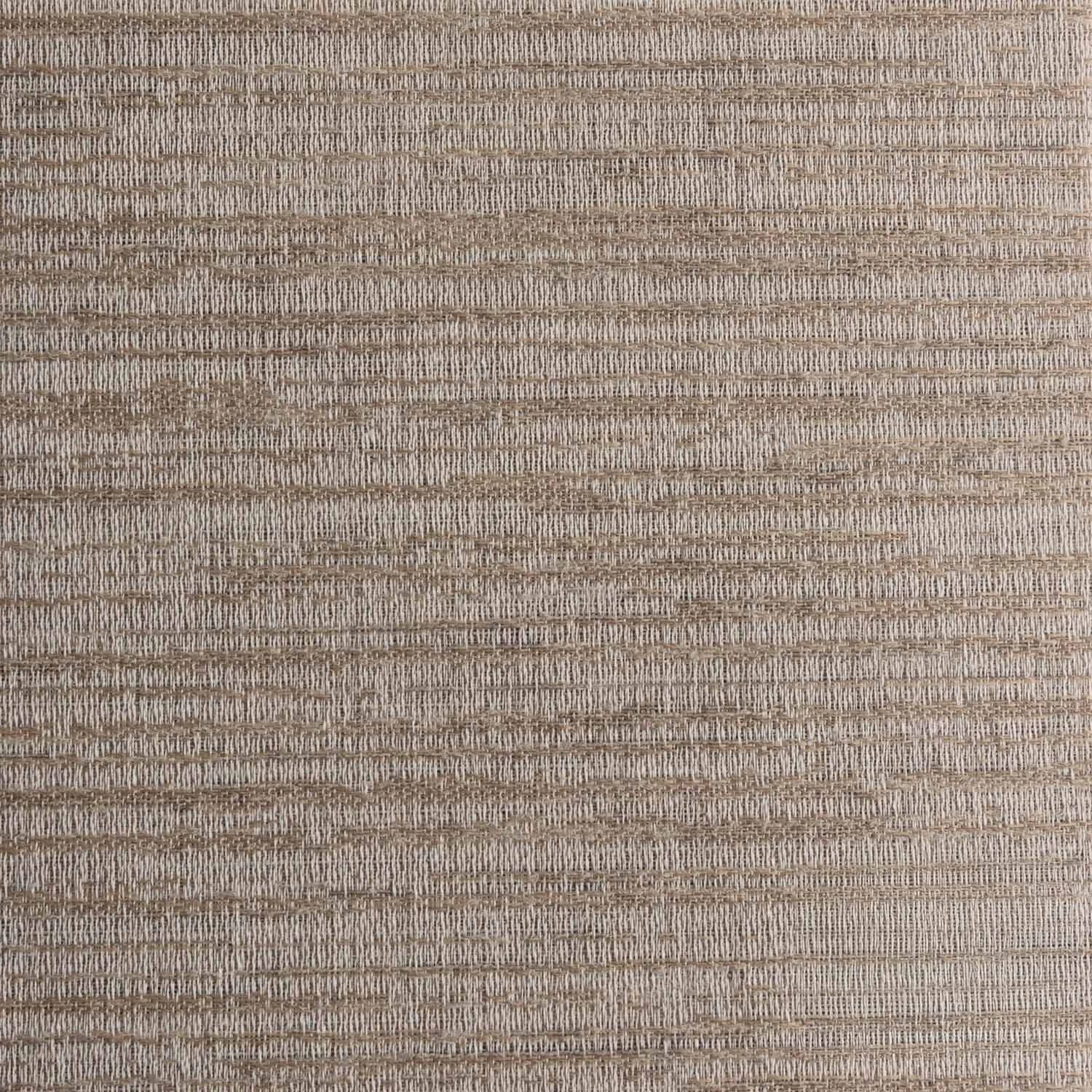
An irregular brushstroke texture, visible even from a distance. It's the lightest fabric in the range and diffuses light unevenly, with variations in tone.
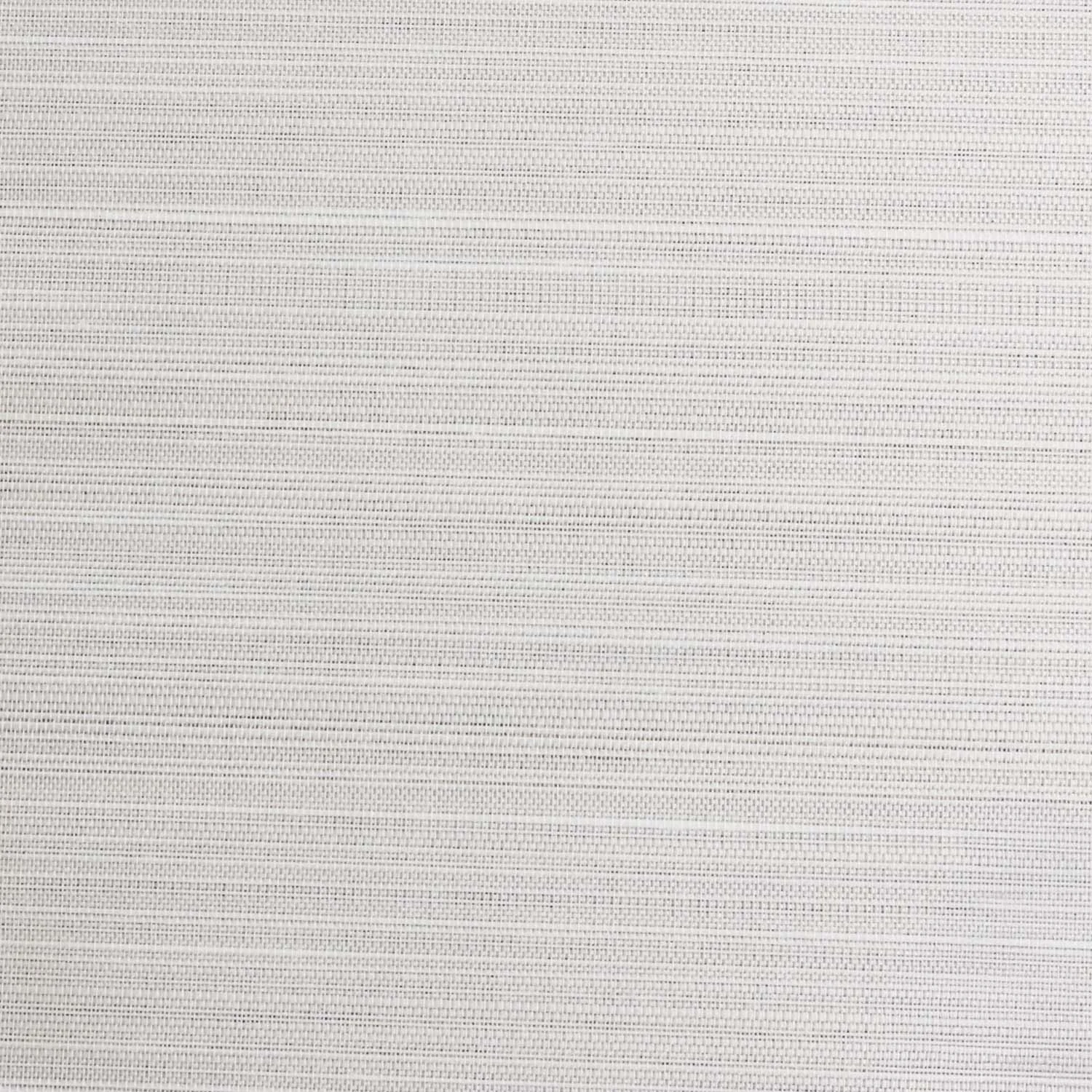
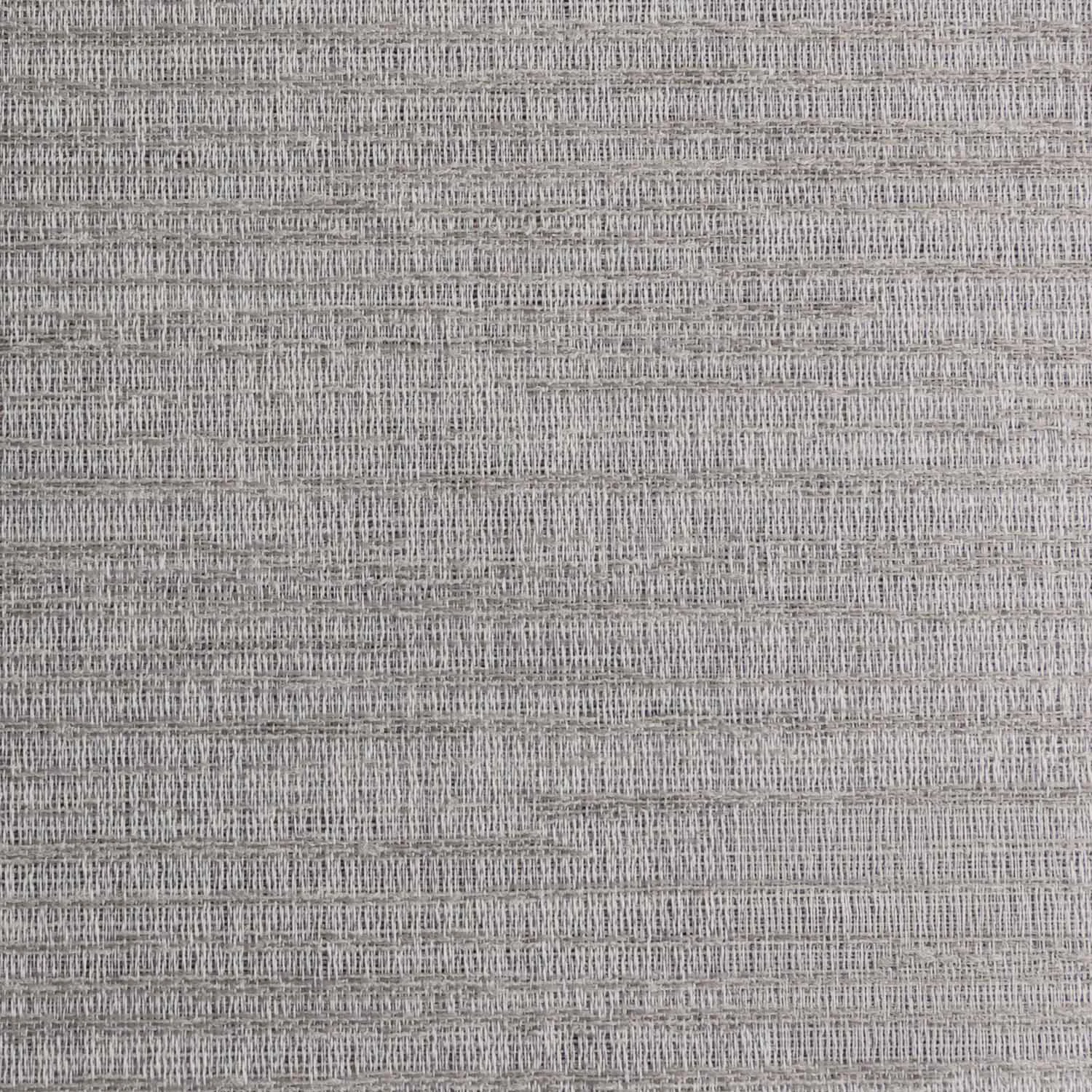
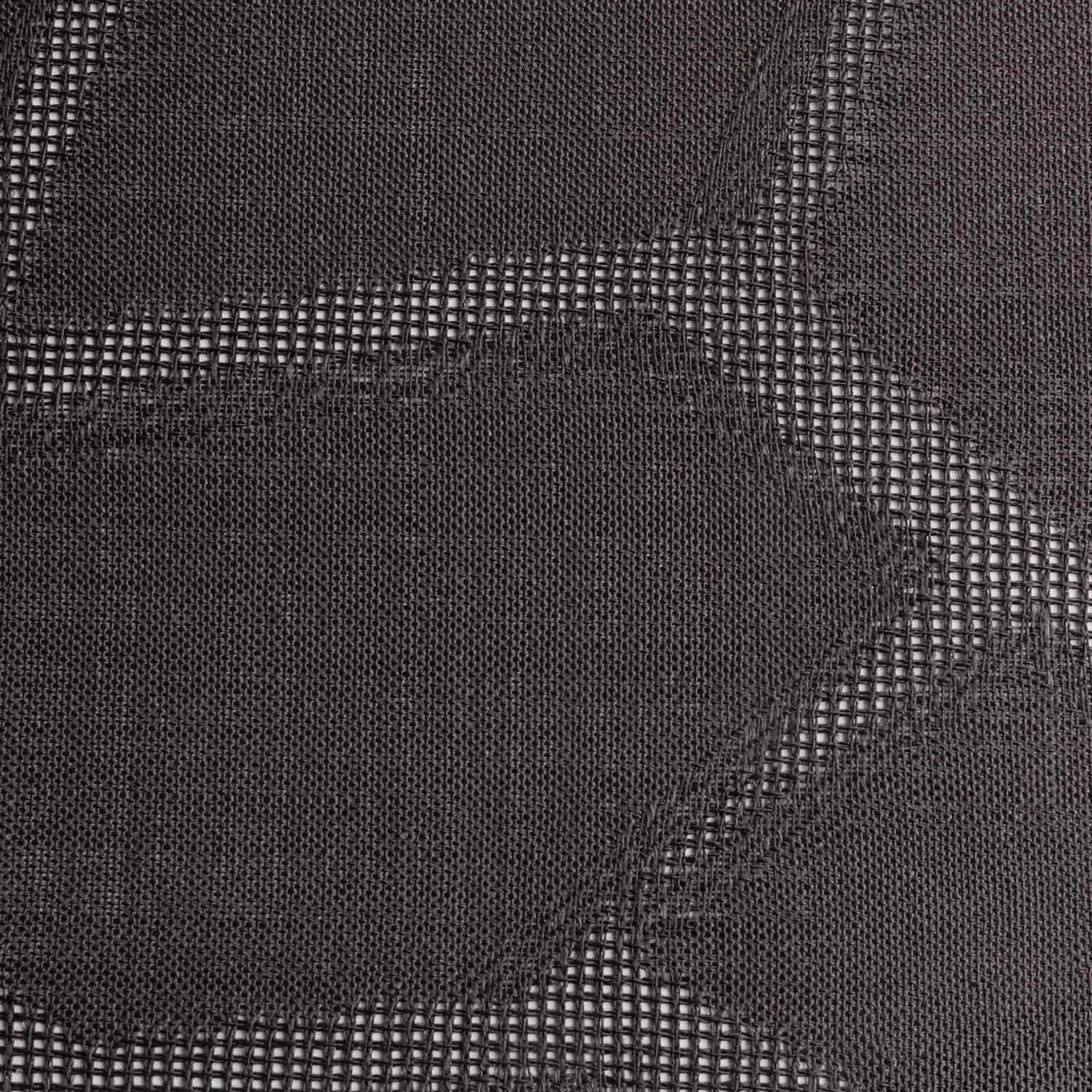
A geometric diamond texture, visible against the light and discreet when the blind is down. It's the heaviest of the sheer fabrics (220 g/m²).
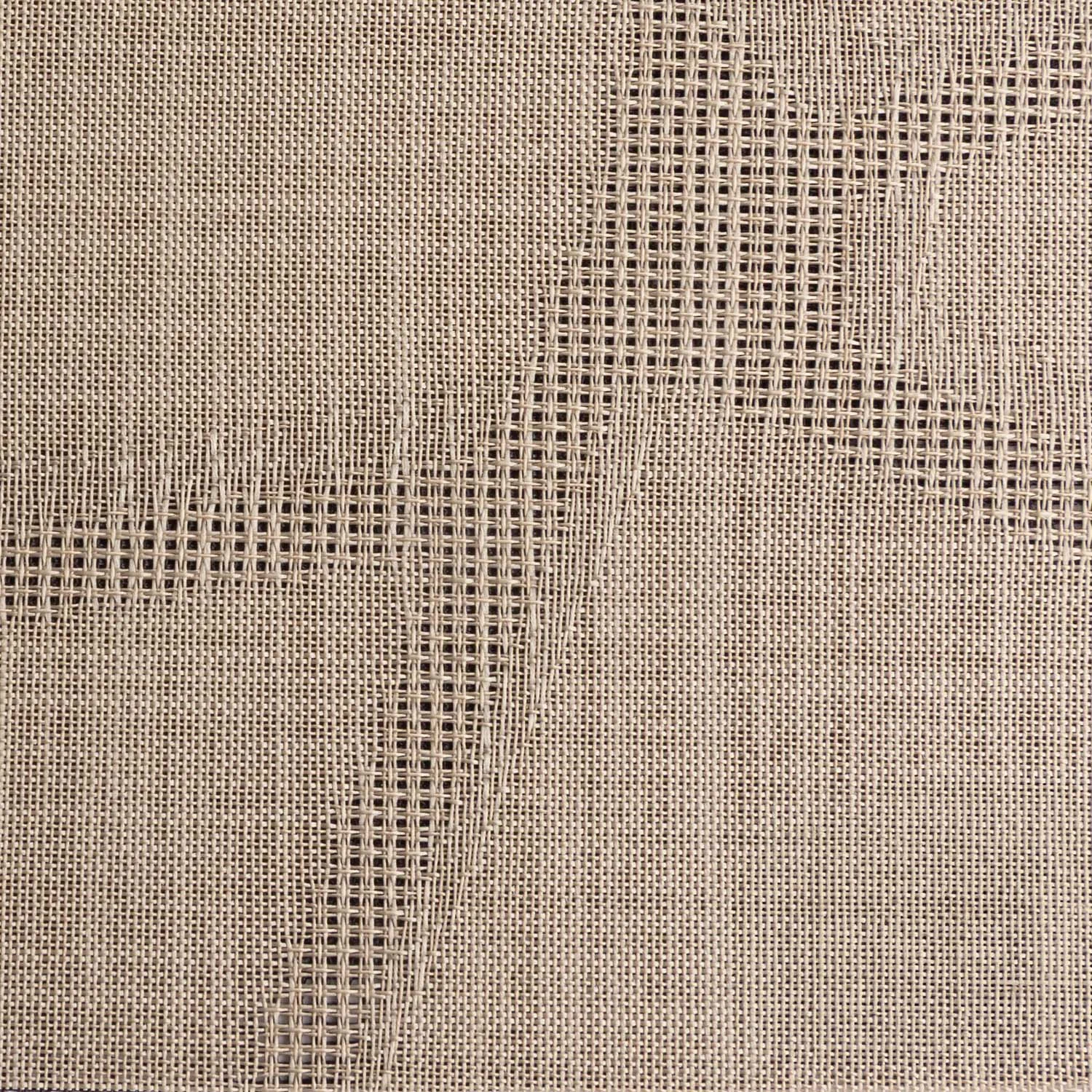
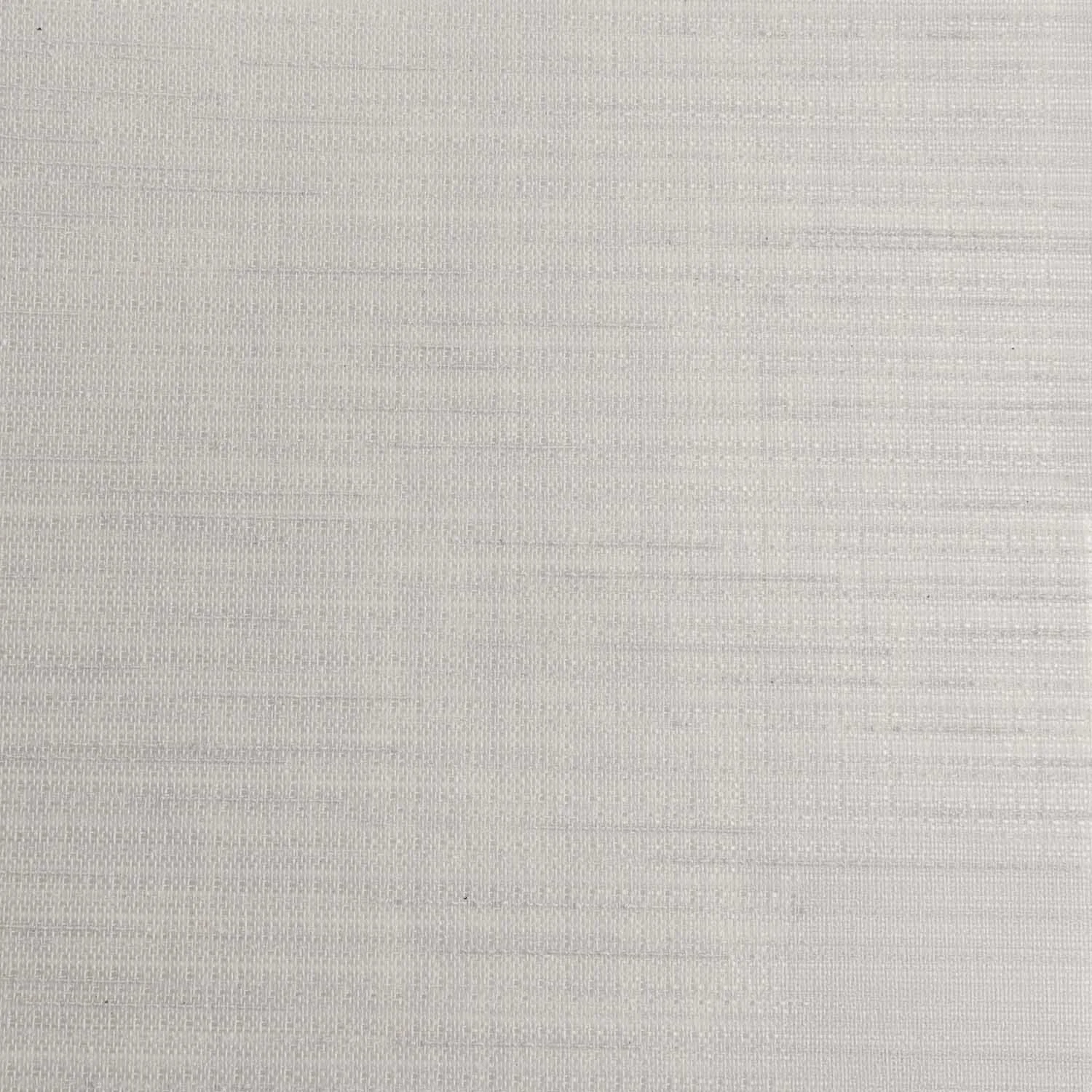
A smooth surface with a satin finish. It lets more light through than any other fabric: the blind almost disappears and the room stays bright.
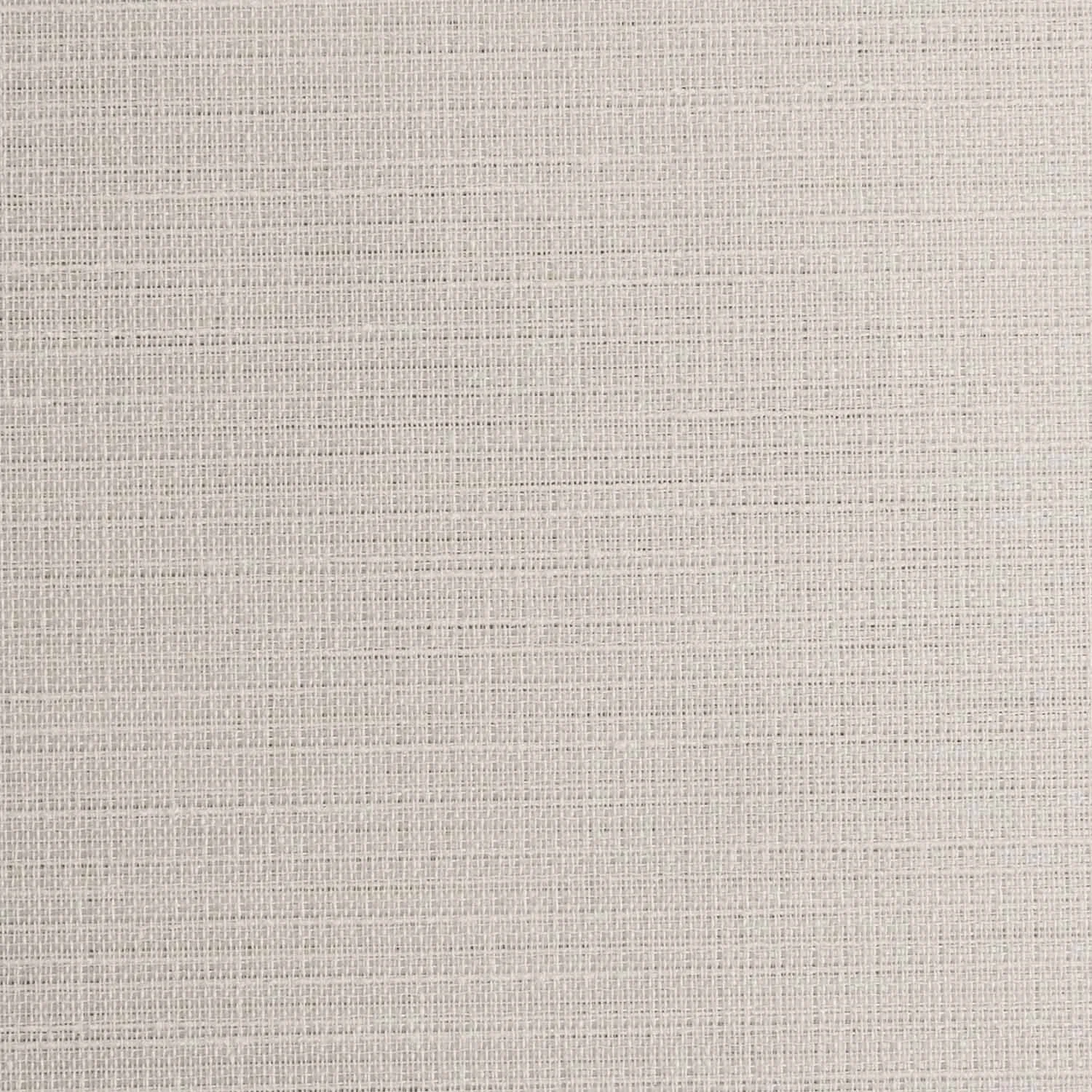
Tv changes with colour
Darker colours filter more, lighter colours let more light through.
All fabrics are classified according to EN 14501. Where a value is shown as a range, it varies by colour.
| Blackout | Light-filtering | Sheer | ||||||
|---|---|---|---|---|---|---|---|---|
| Blend Blackout |
Canvas Blackout |
Earth | Horizon | Fine Line | Diamond | Brush | Satin | |
| Tv (light transmittance) | 0% | 0% | 6-16% | 19-44% | 15-30% | 20-32% | 22-46% | 45-49% |
| Weight (g/m²) | 385 | 340 | 195 | 170 | 195 | 220 | 160 | 140 |
| Thickness (mm) | 0.56 | 0.44 | 0.49 | 0.32 | 0.69 | 0.70 | 0.43 | 0.48 |
| Composition | 100% polyester | 100% polyester | 90% polyester 10% cotton | 100% polyester | 100% polyester | 100% polyester | 100% polyester | 100% polyester |
| Colour fastness | min. 4-5 | min. 4-5 | min. 4-5 | min. 5-6 | min. 4-5 | min. 4-5 | min. 4-5 | min. 4-5 |
| Solar reflectance | 75% | 74% | 37-49% | 23-50% | 34-40% | 27-38% | 23-52% | 34-44% |
| UV transmittance | 0% | 0% | 6-7% | 9-19% | 12-19% | 21-27% | 22-29% | 26-31% |
| Available colours | 5 | 3 | 3 | 4 | 4 | 2 | 3 | 4 |
Don't choose the fabric by on-screen colour alone
The same colour comes in different families: a Blend Blackout Seashell Ivory and a Satin Collection Seashell Ivory look similar in photos, but the first darkens the room and the second keeps it bright. If you can't decide between two fabrics, order samples and try them at your window.
BRACKET AND BOTTOM BAR
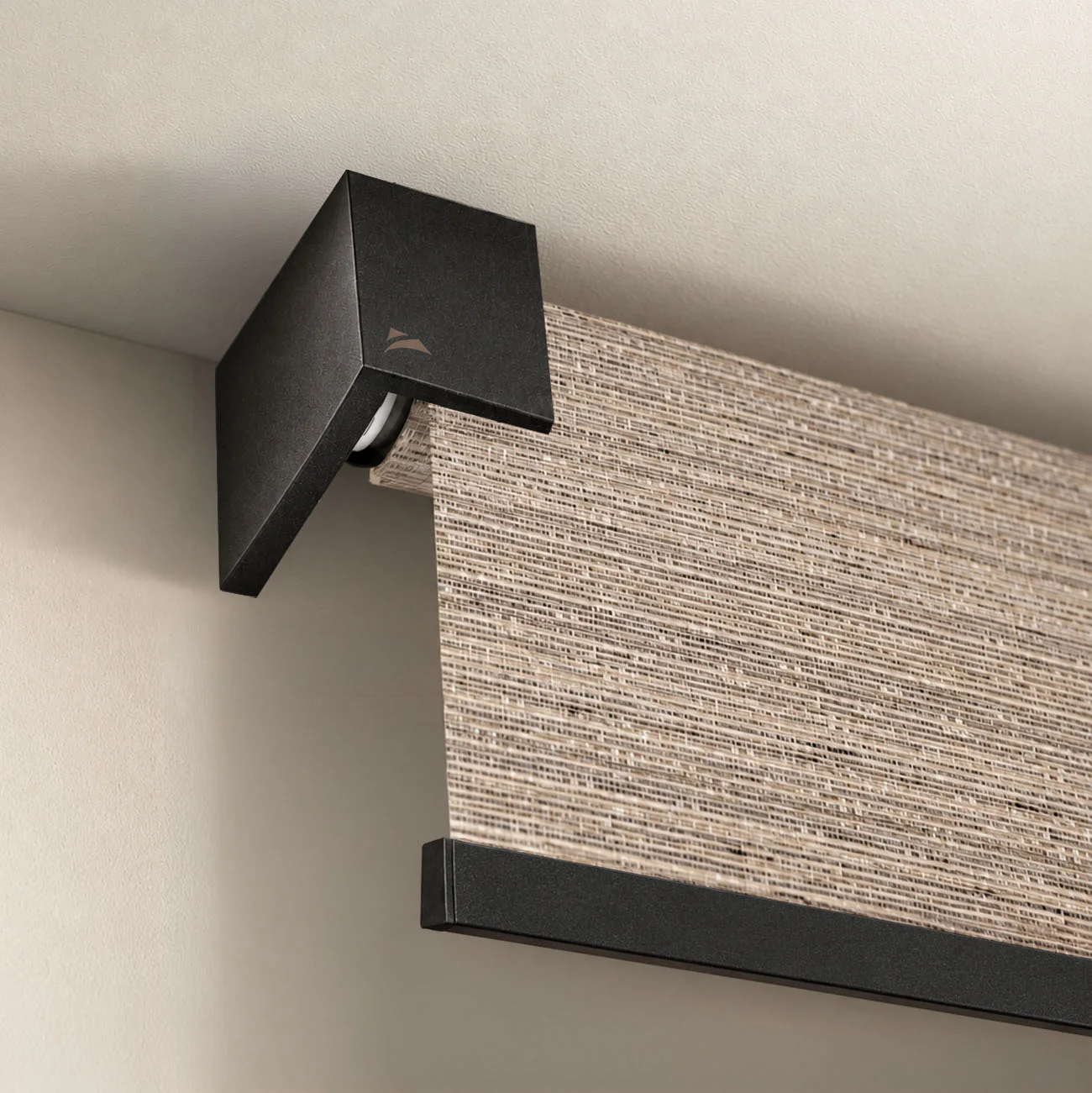
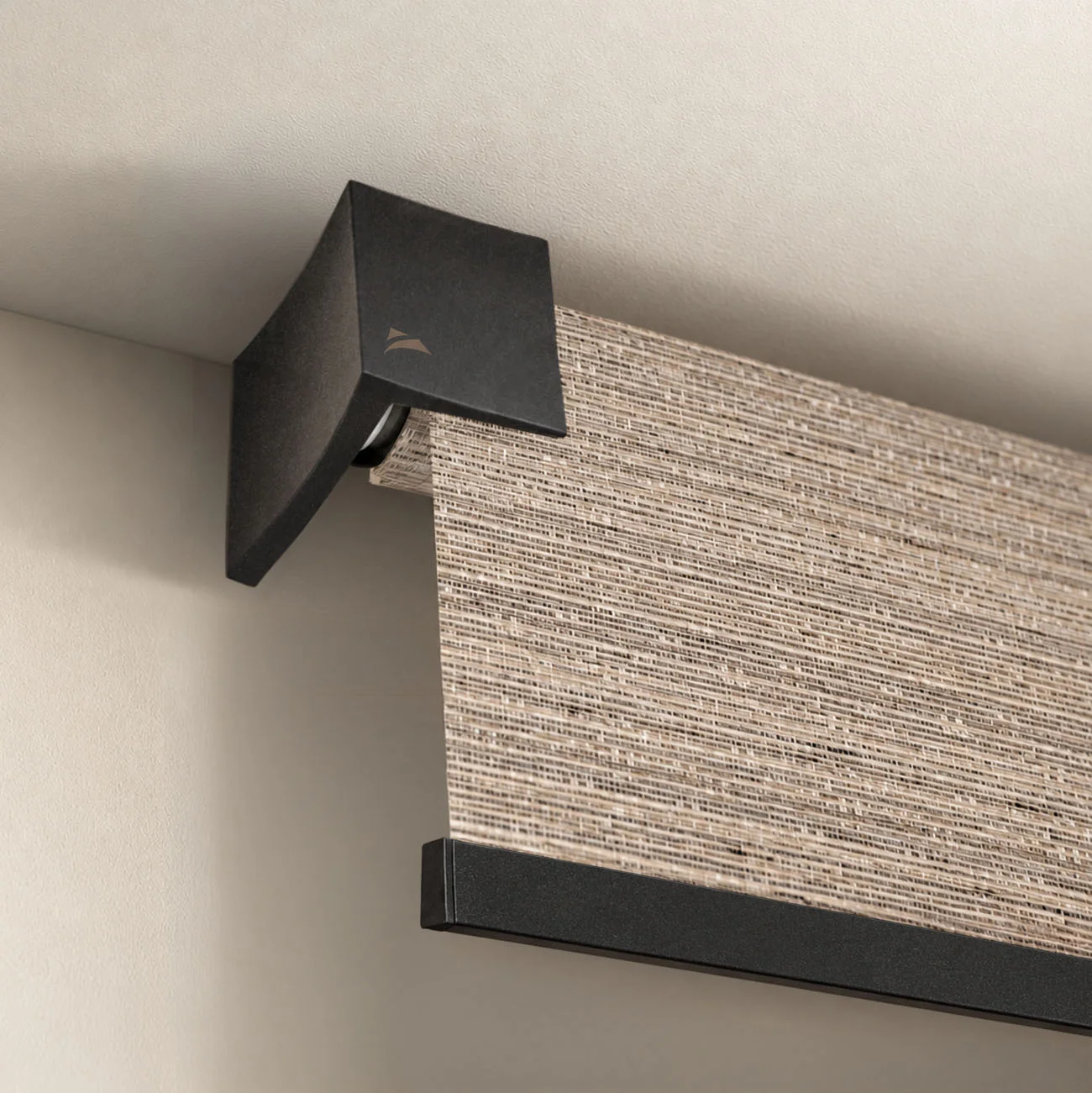
Kyma and Recta differ in the design of the bracket, the side profile that covers the mechanism. Fabrics, sizes and operation options are the same for both models.
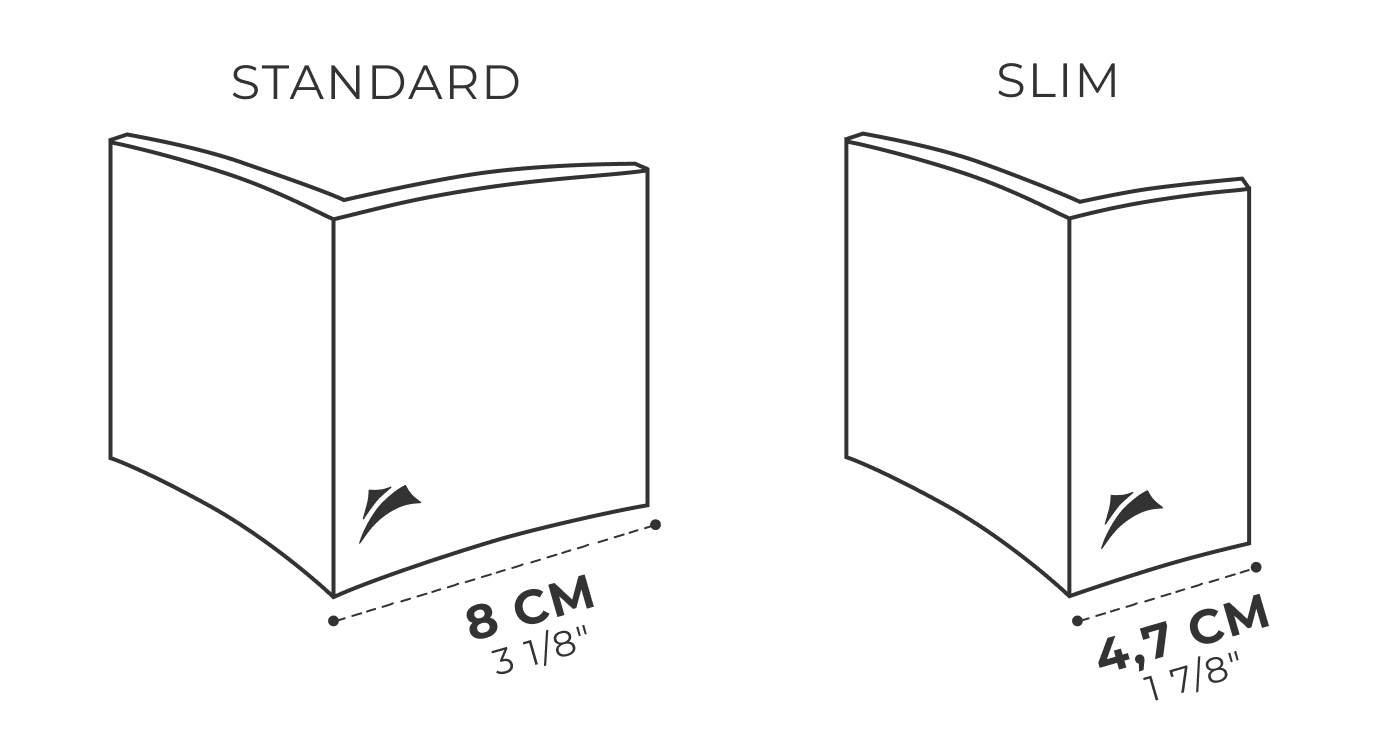
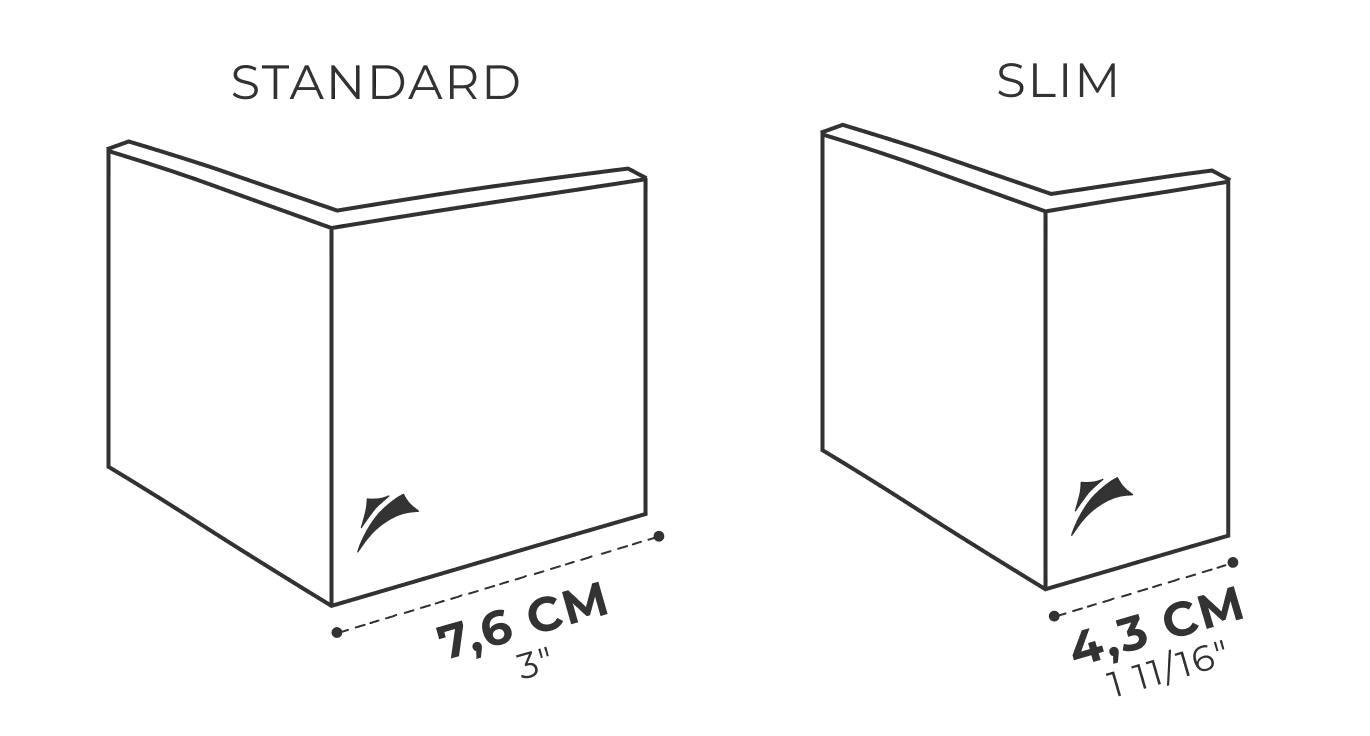
Each bracket comes in two widths, Standard and Slim, with the same aluminium and the same structure: the only change is how much of the bracket you see when you look at the window. The difference is aesthetic.

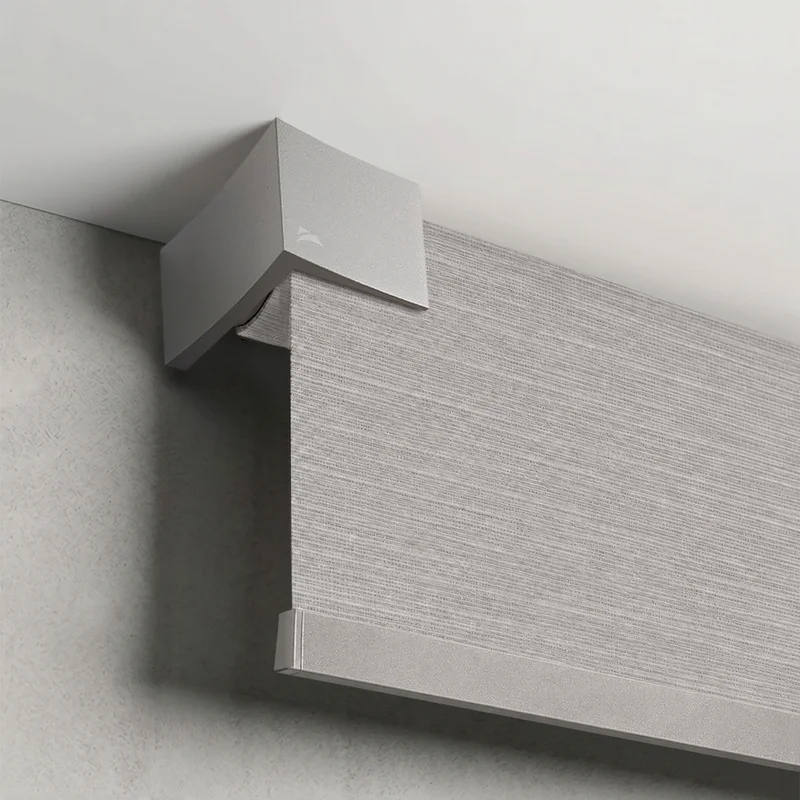
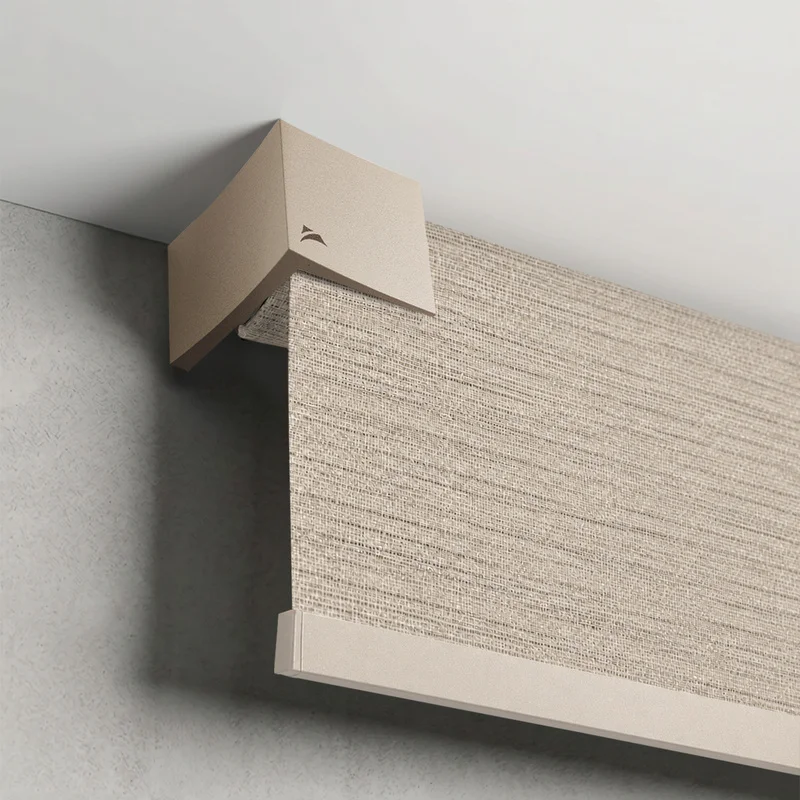
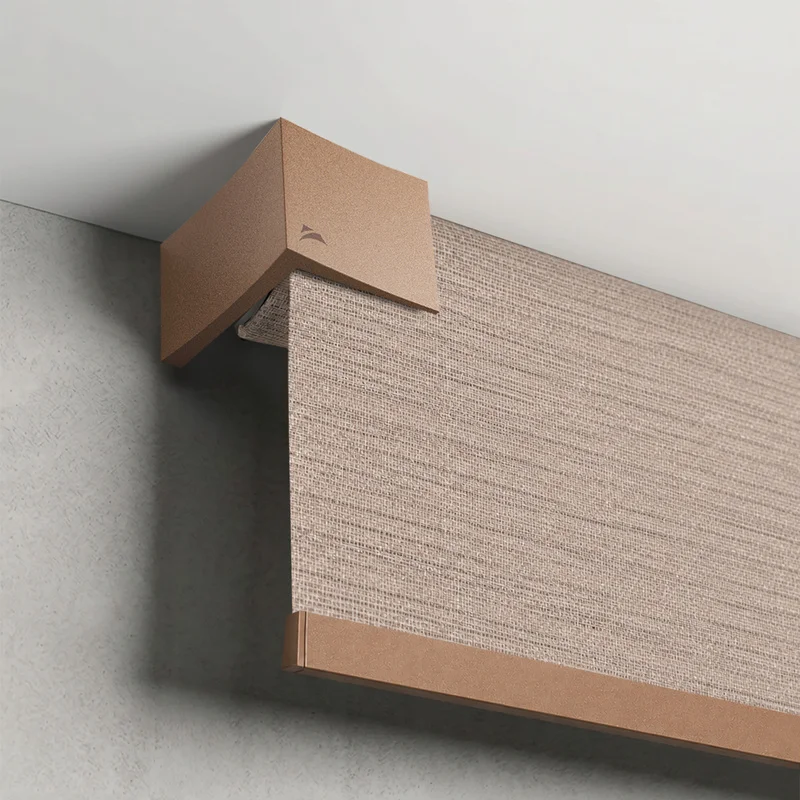
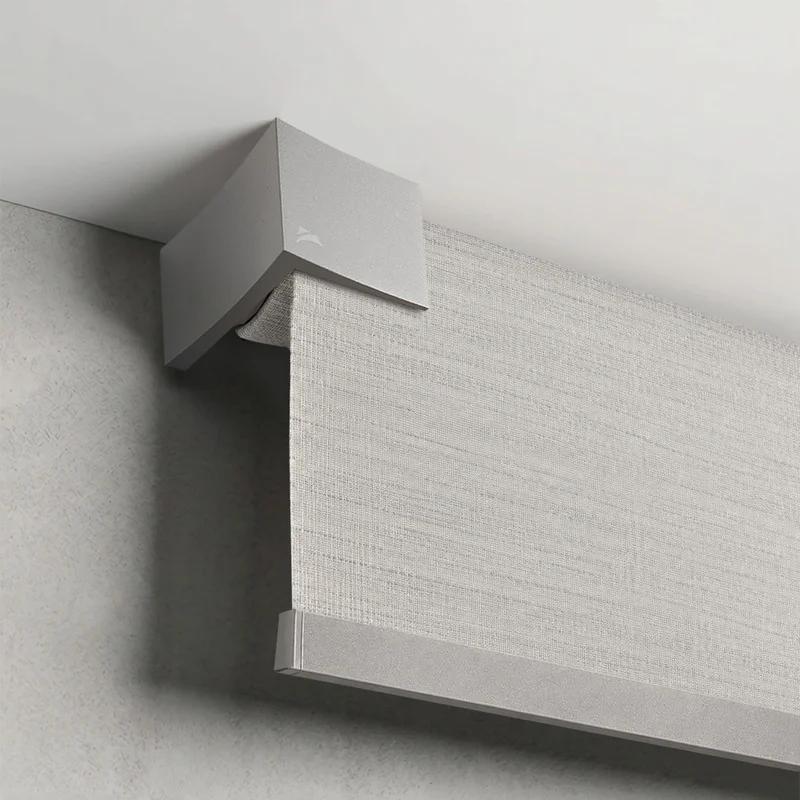
Bracket with a concave wave, for rooms with softly curved furniture.


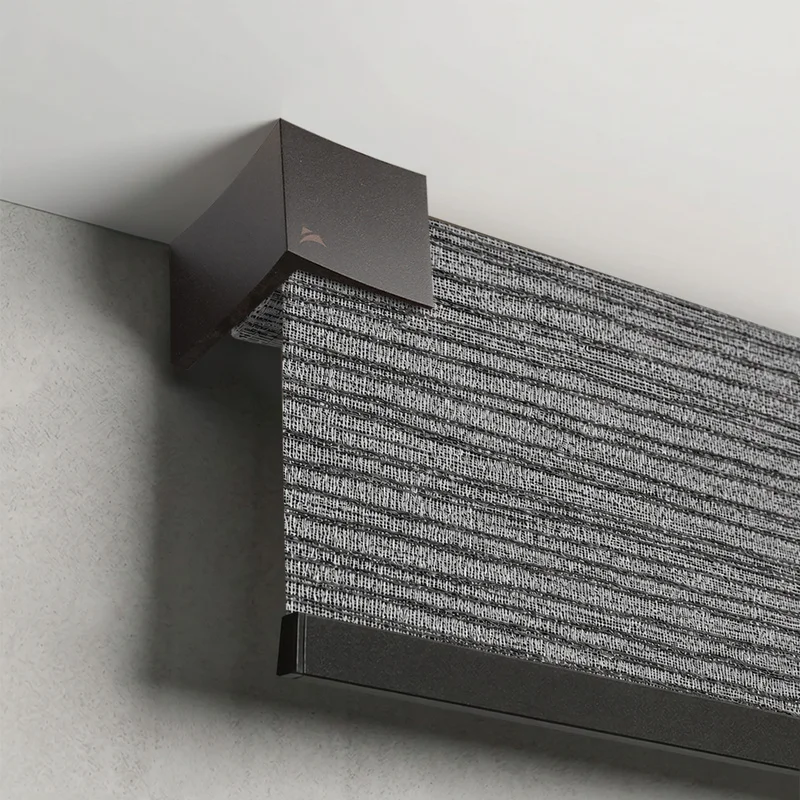
Bracket with straight lines and 90° corners, for rooms with clean geometry.

The Standard width isn't sturdier
Both widths have the same structure and the same strength: only their visual presence at the window changes.
With the same bracket you can fit the blind to the wall or the ceiling. The bracket has two fixing points: on the back for wall fitting, on top for ceiling fitting.

wall fitting

ceiling fitting
The screws stay hidden
On both models the bracket closes with a magnetic system that hides the technical parts, with no visible screws, for a clean, minimal look.
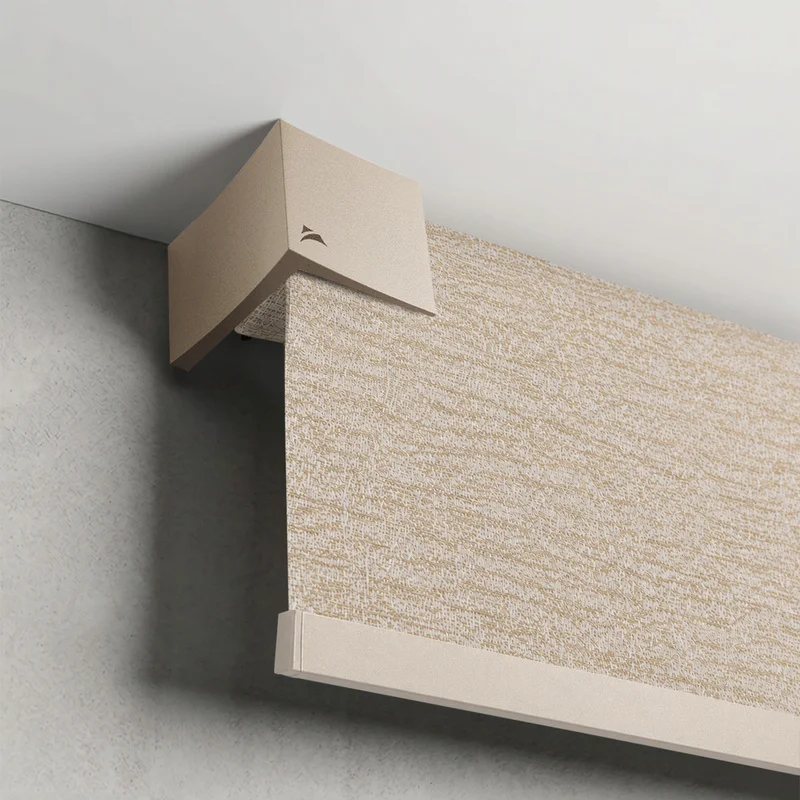
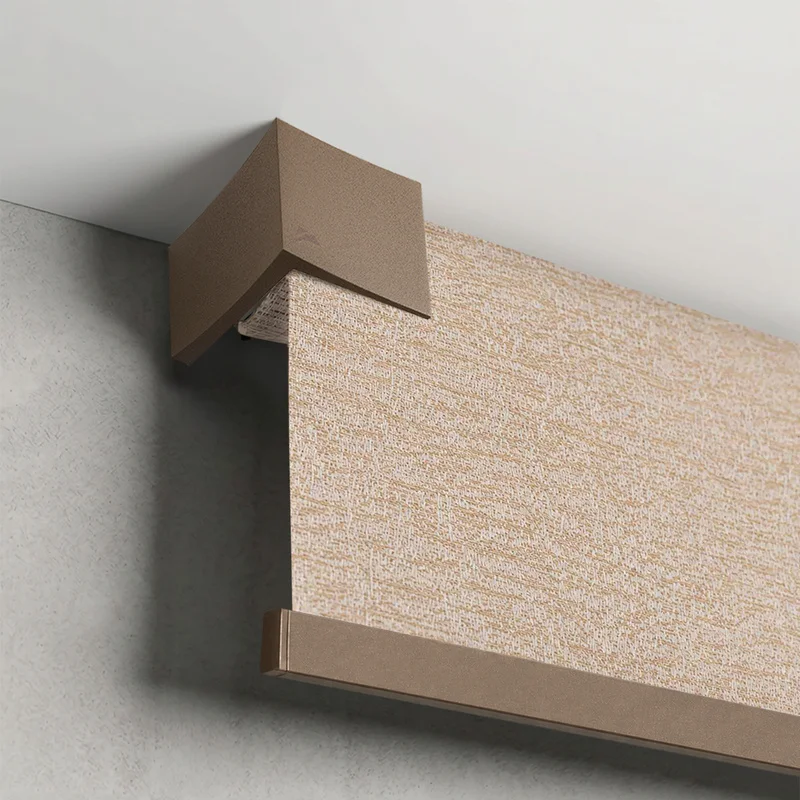
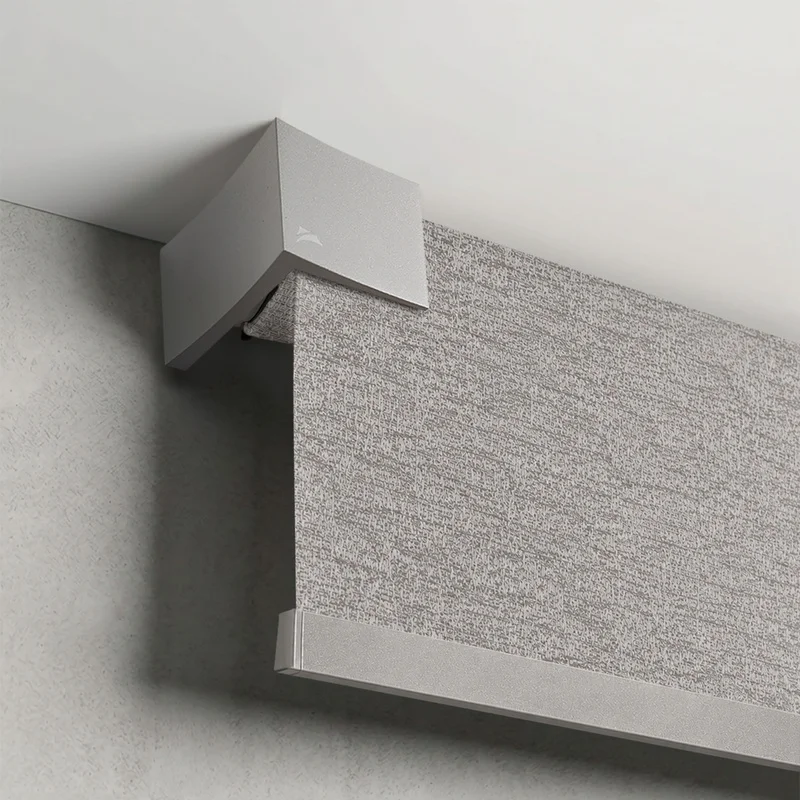
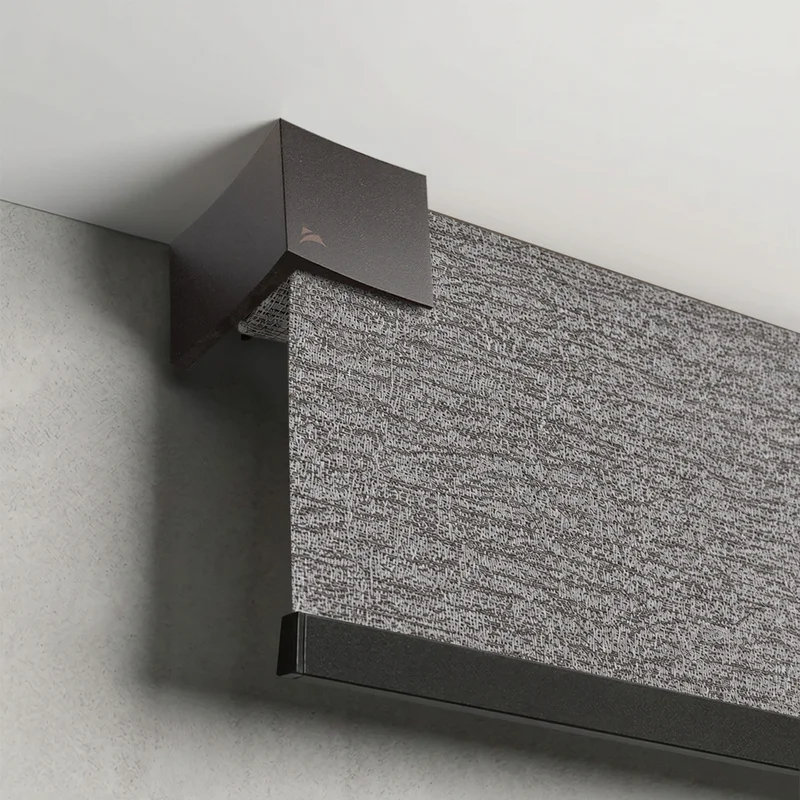
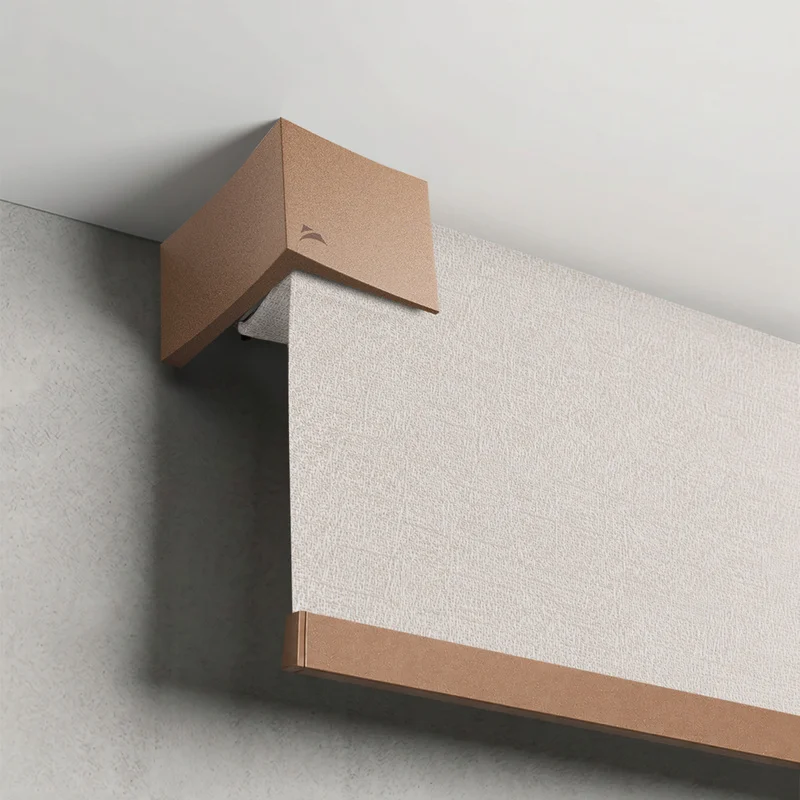
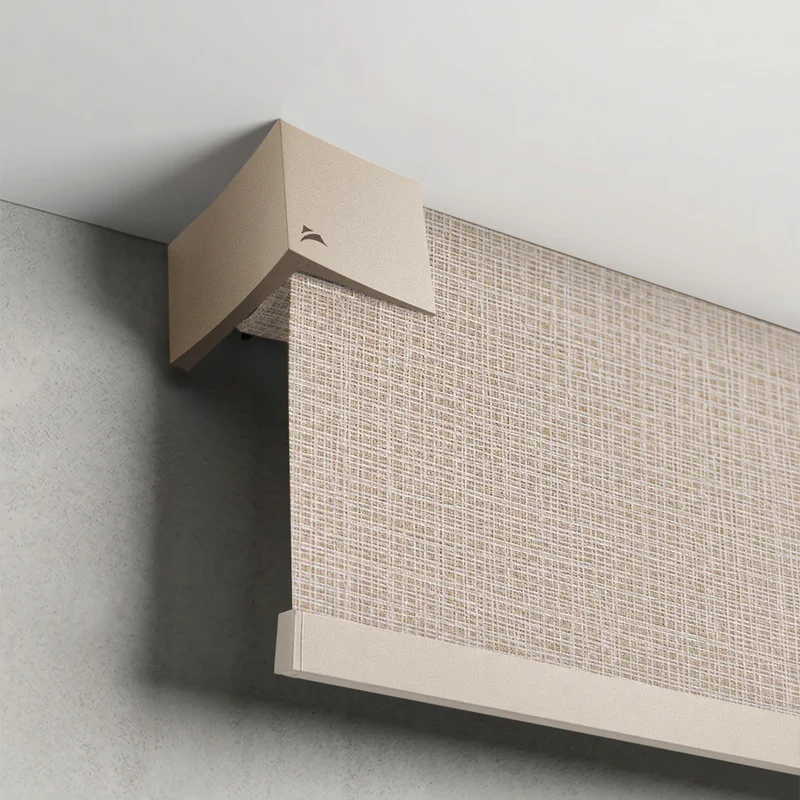
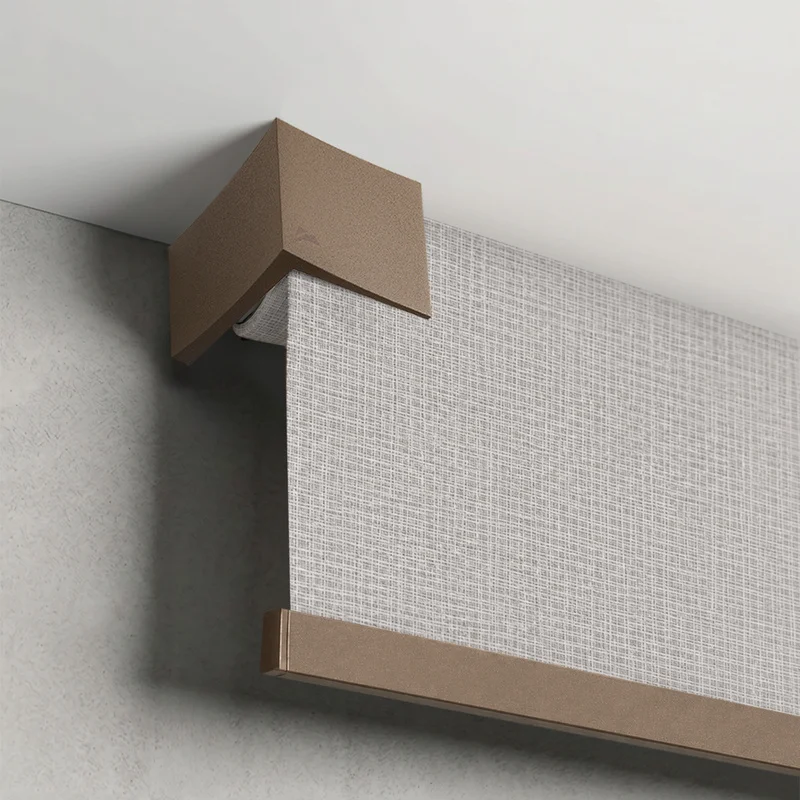
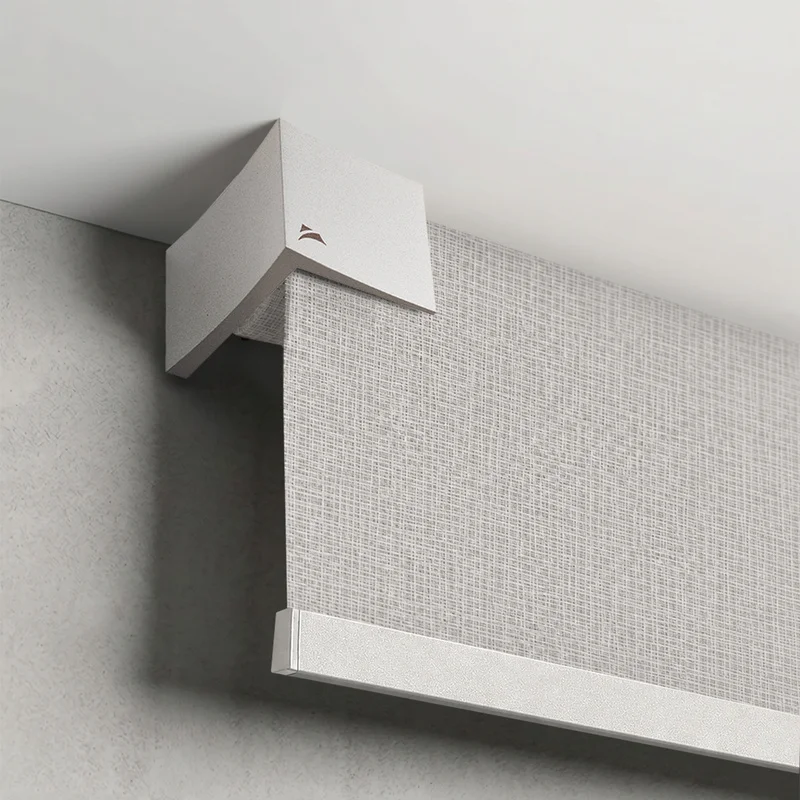
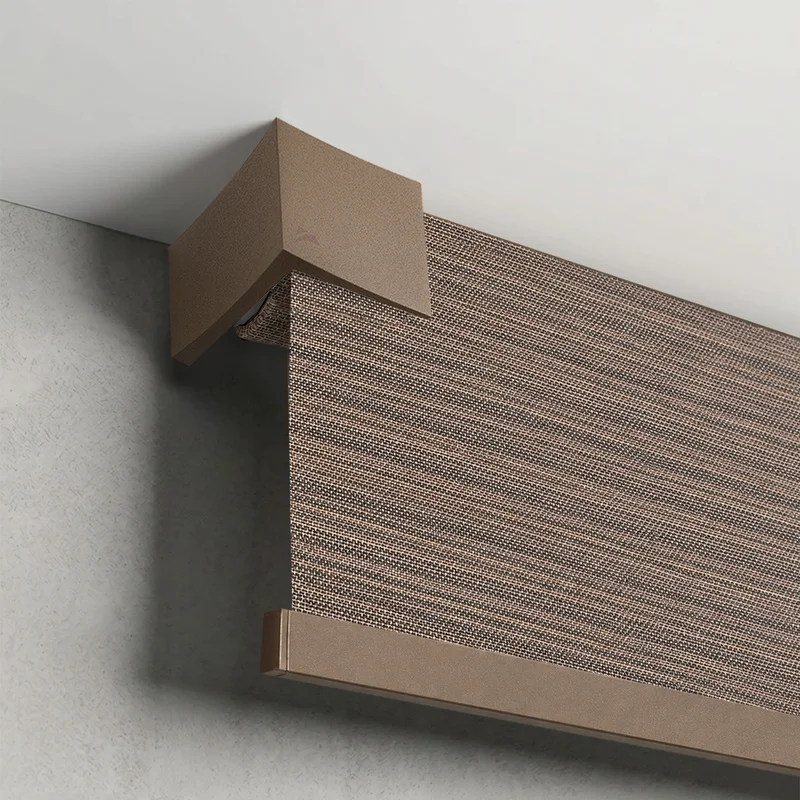
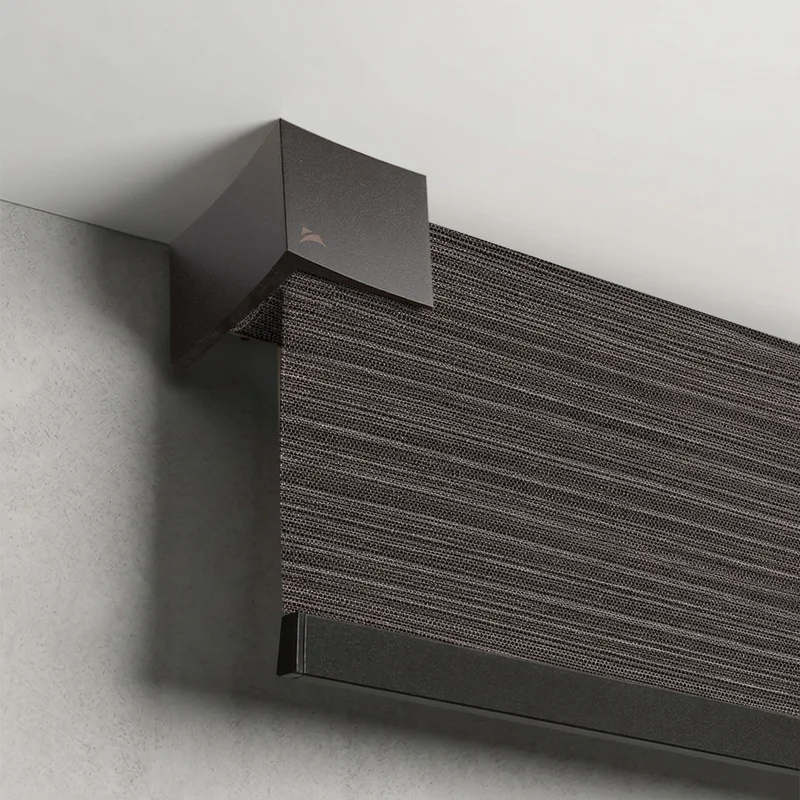
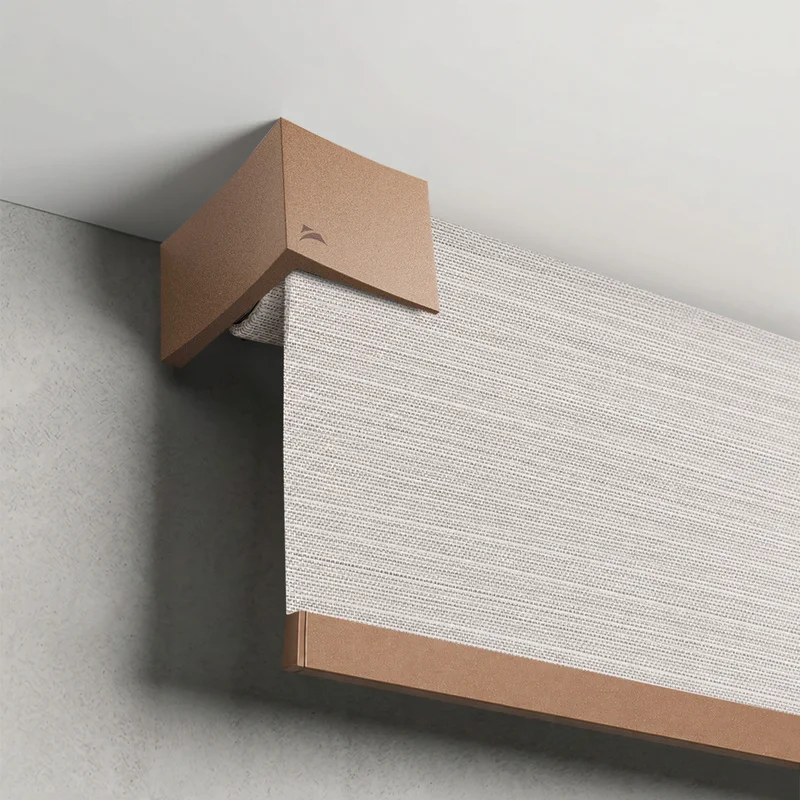
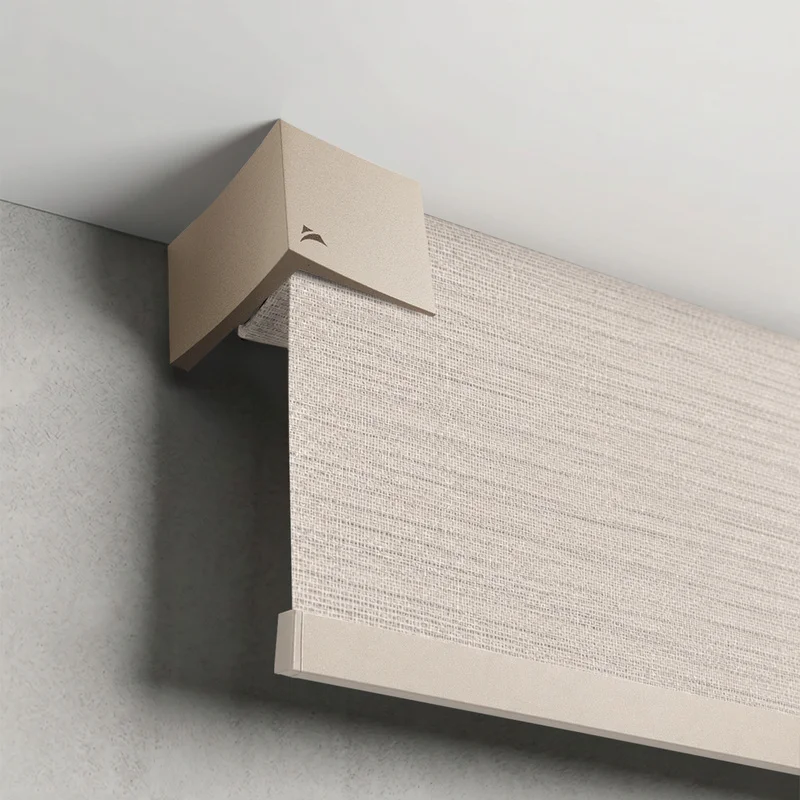
The six colours are the same for Kyma and Recta and for both bracket widths. None of them is a flat colour: each has small variations in tone that give the bracket movement. The bottom bar, which is the bar at the base of the fabric, matches the bracket colour.

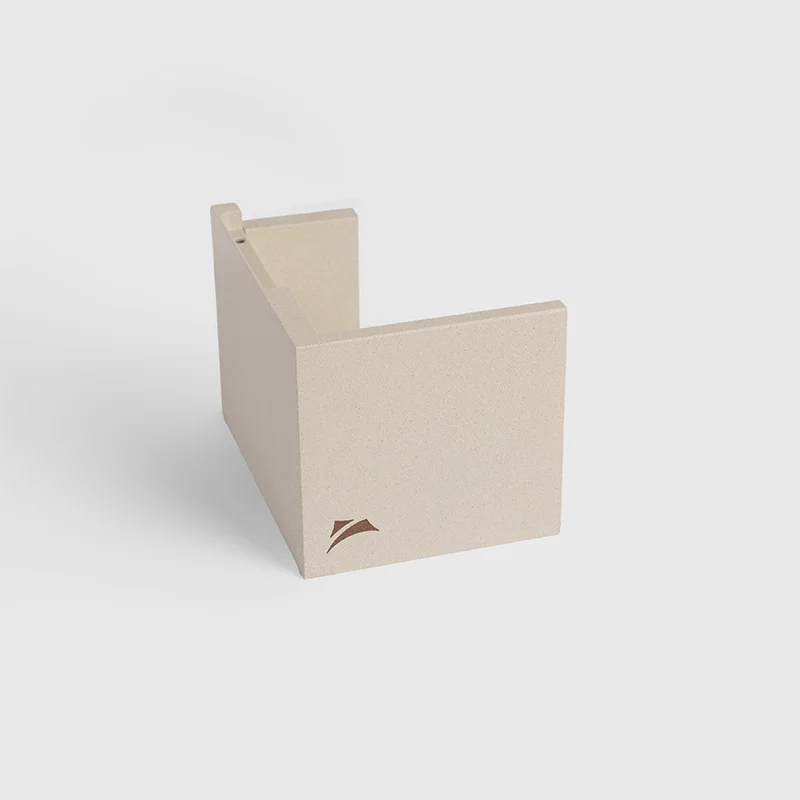
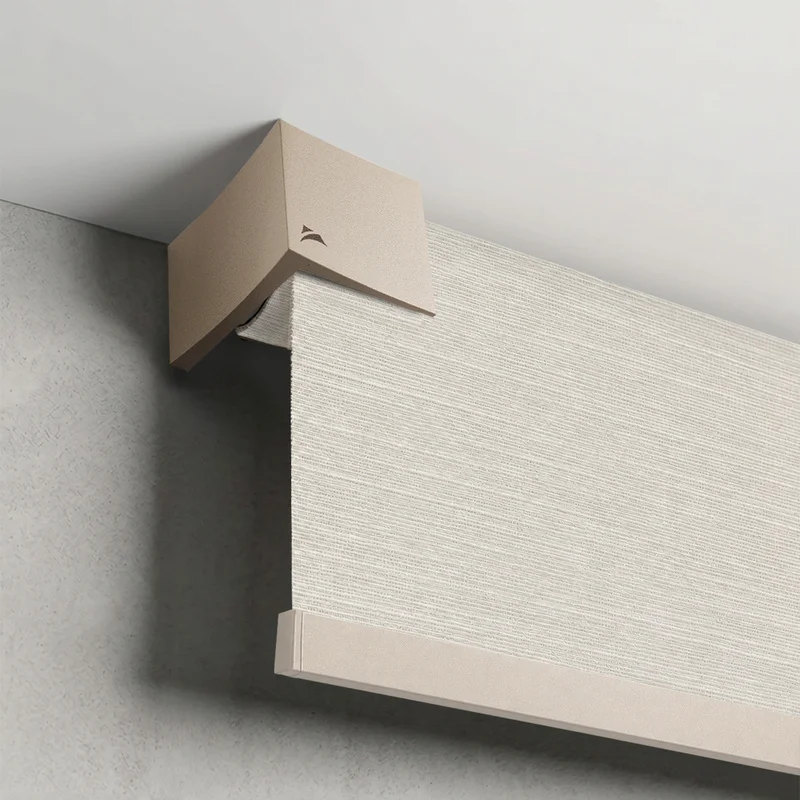
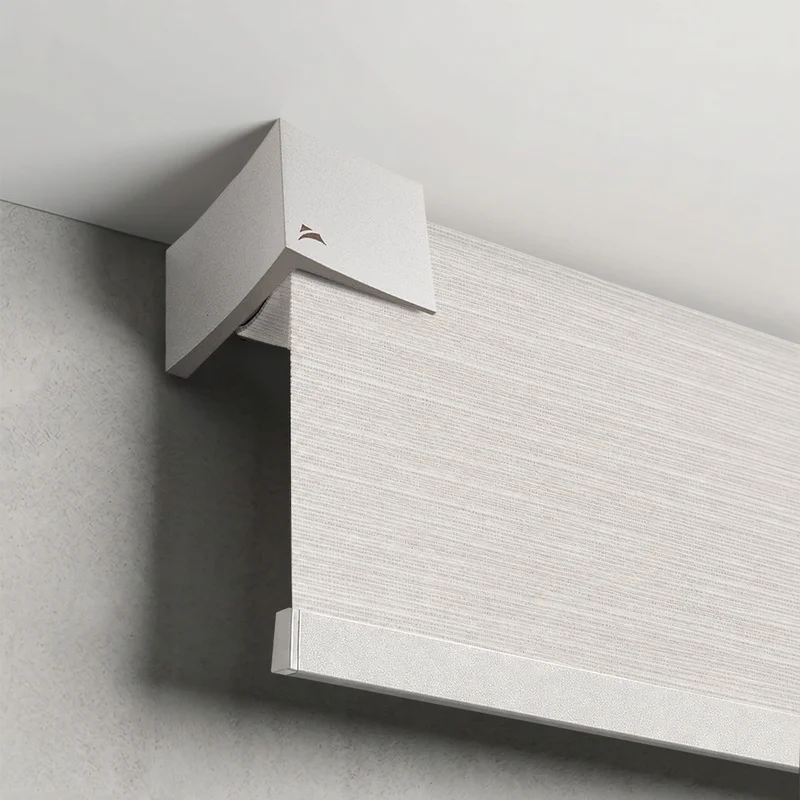
An ivory with a rough surface and lighter and darker flecks. It pairs with light fabrics, such as Blend Blackout Natural Ivory and Satin Seashell Ivory.

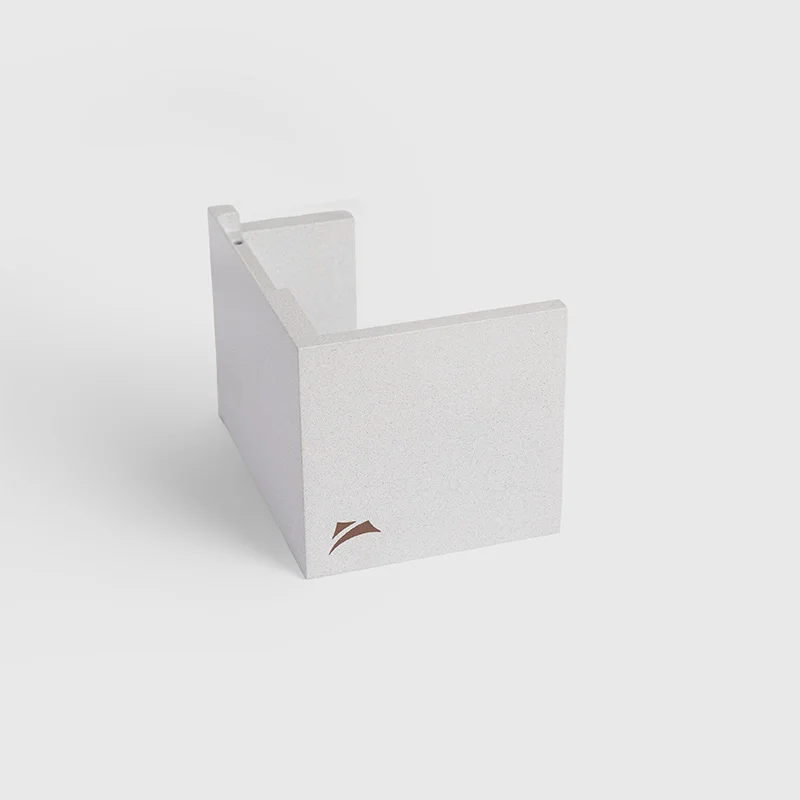
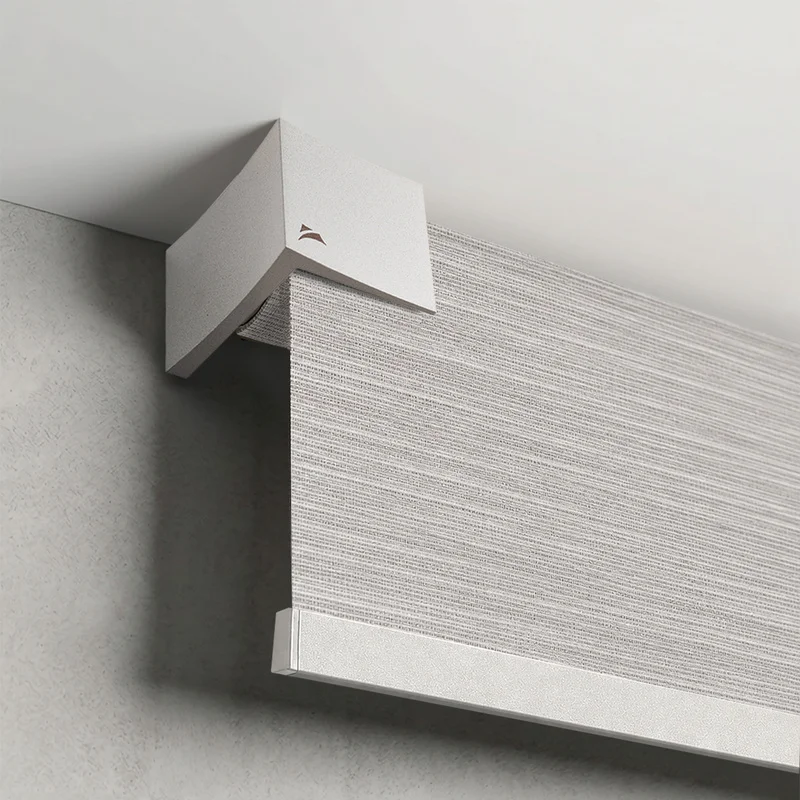
An off-white with darker flecks that stop the bracket looking flat. It goes with whites and light greys, such as Horizon Cotton White and Silver Grey.

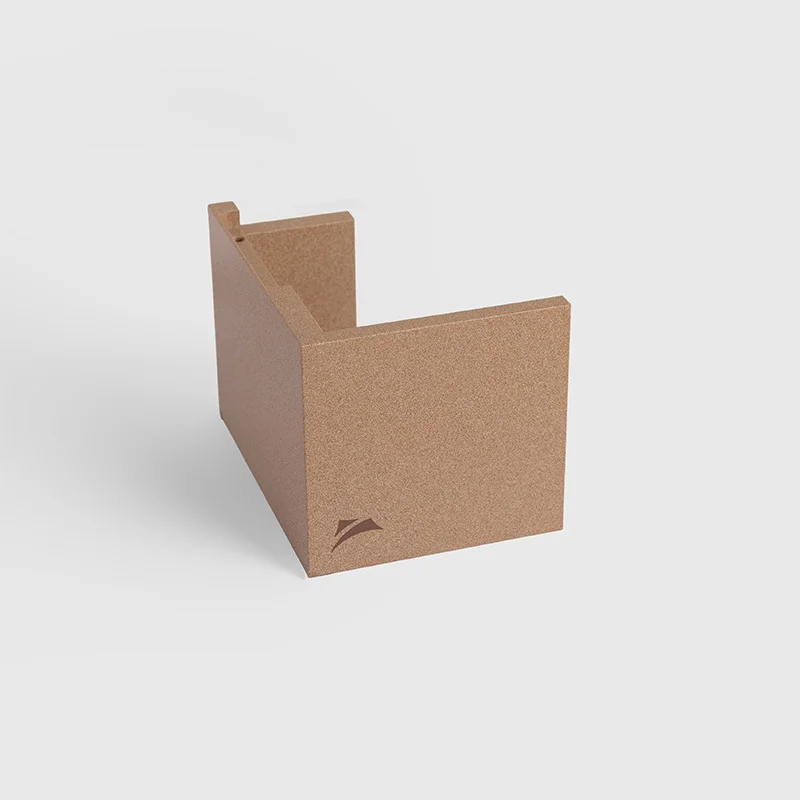
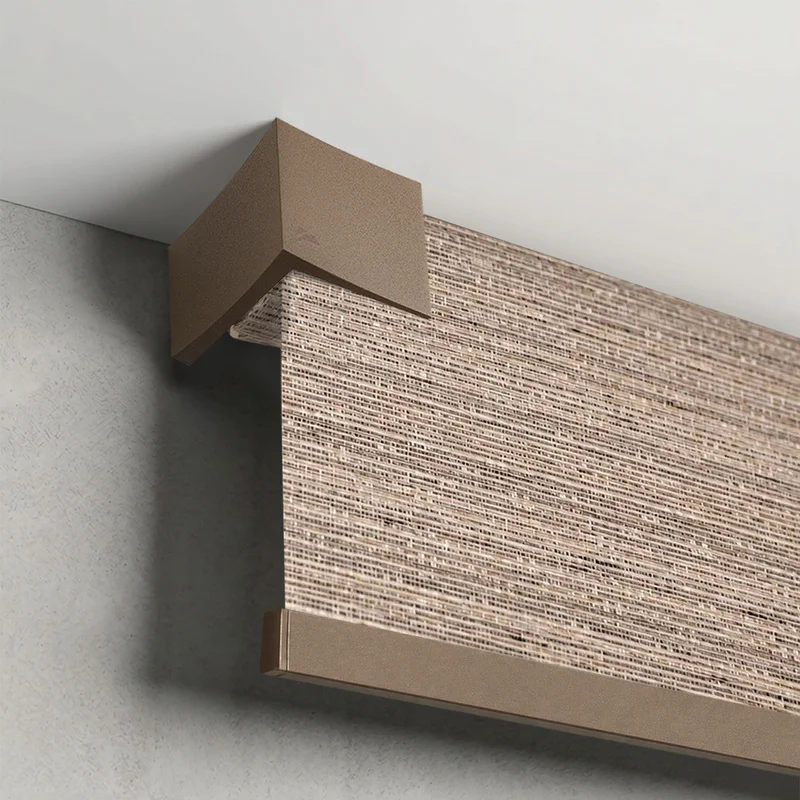
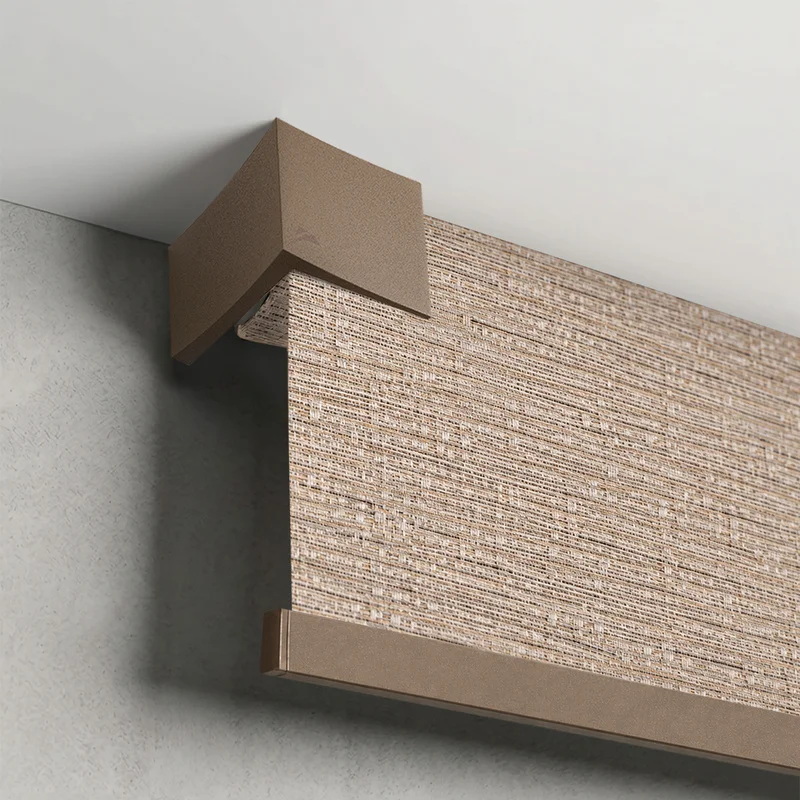
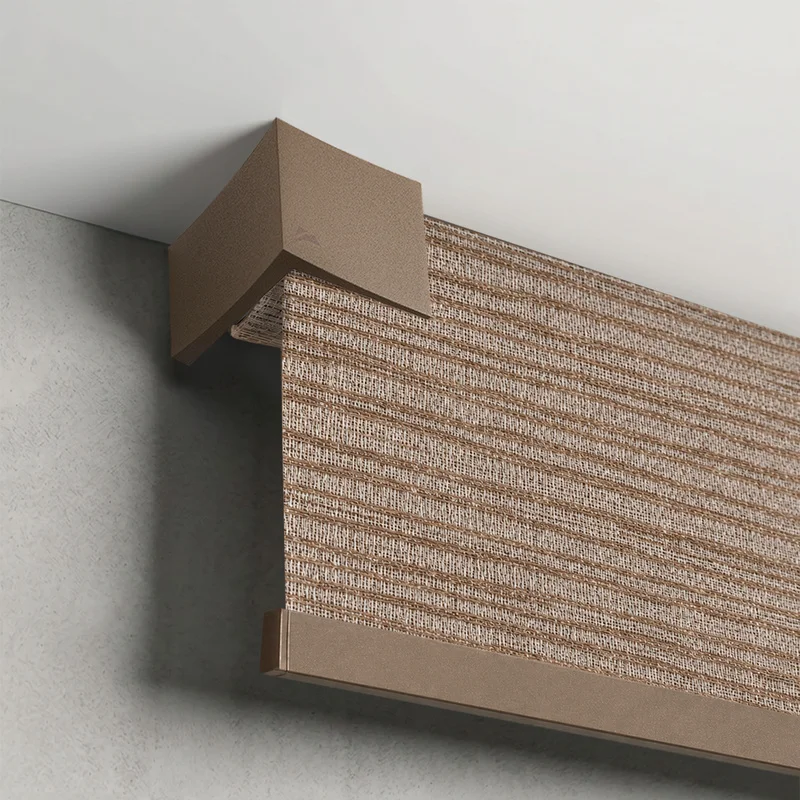
From a distance it's a beige leaning towards brown; up close you can see specks of different colours, like grains of sand, and glints that sparkle when the light catches them. It pairs with light tones, such as Satin Dune Taupe and Brush Cotton White.

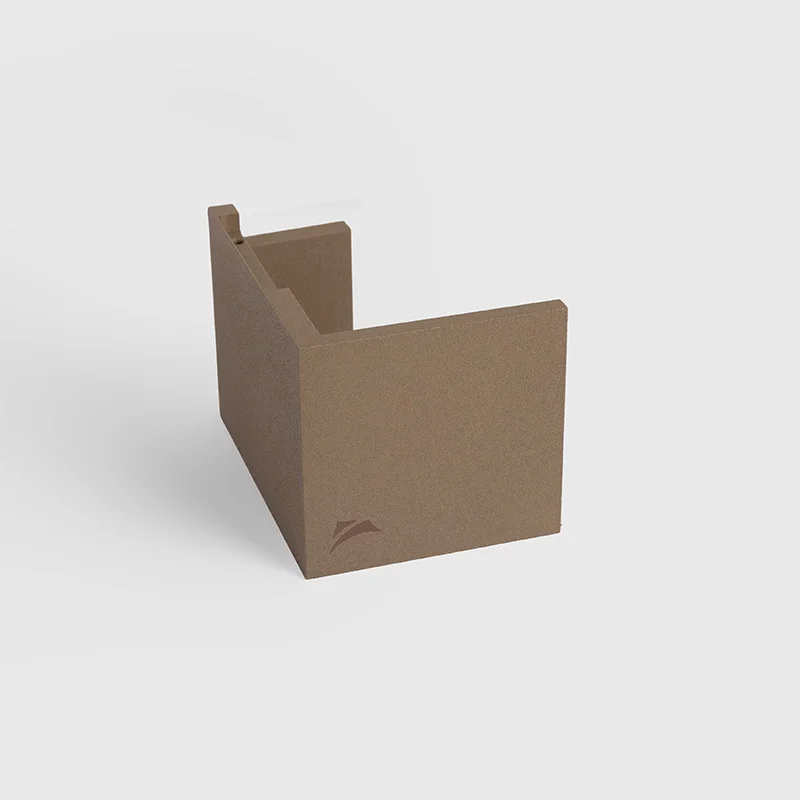
A matt taupe, rough like Soft Ivory, with lighter and darker shades. It's the colour with the most pairings: it goes with the beiges and taupes of almost every collection, from Earth Mineral Beige to Fine Line Dune Taupe.

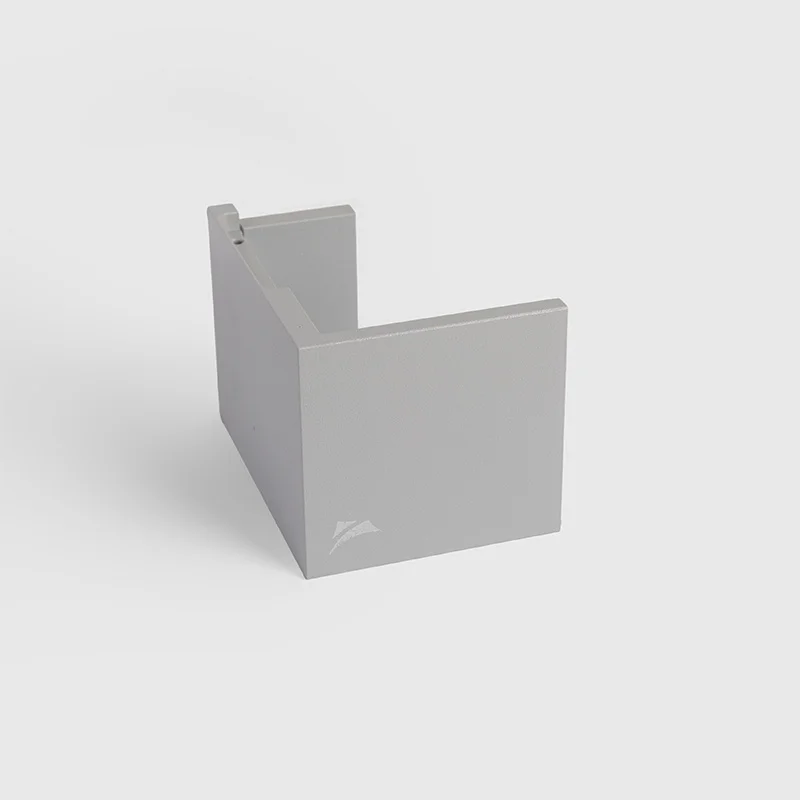
A solid grey, slightly rough and not glossy, with glints that sparkle when the light catches them. It goes with grey fabrics, from the Silver Grey of Blend and Satin to the Granite Grey of Horizon.

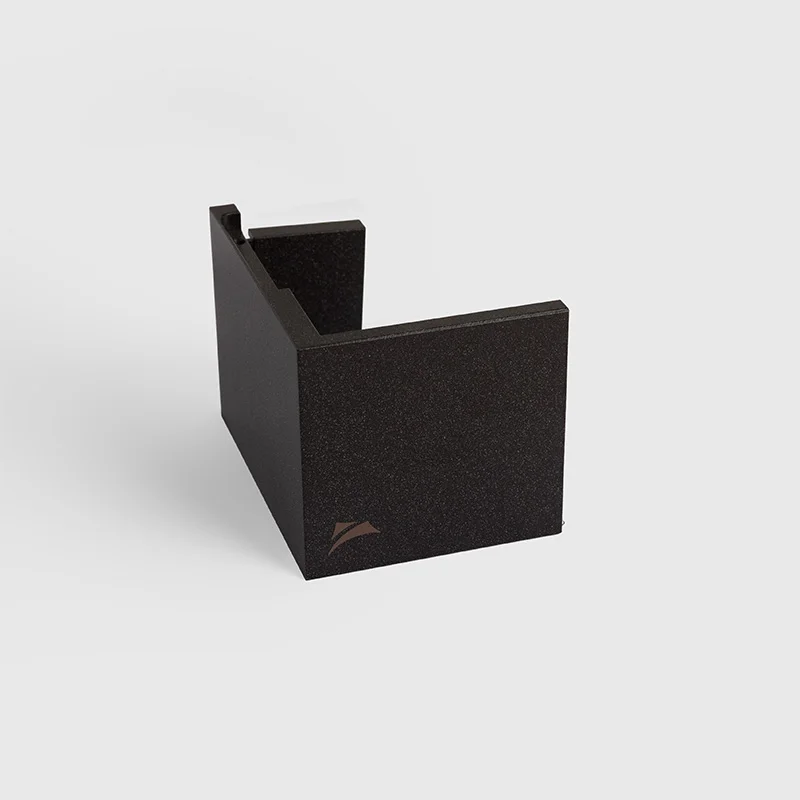
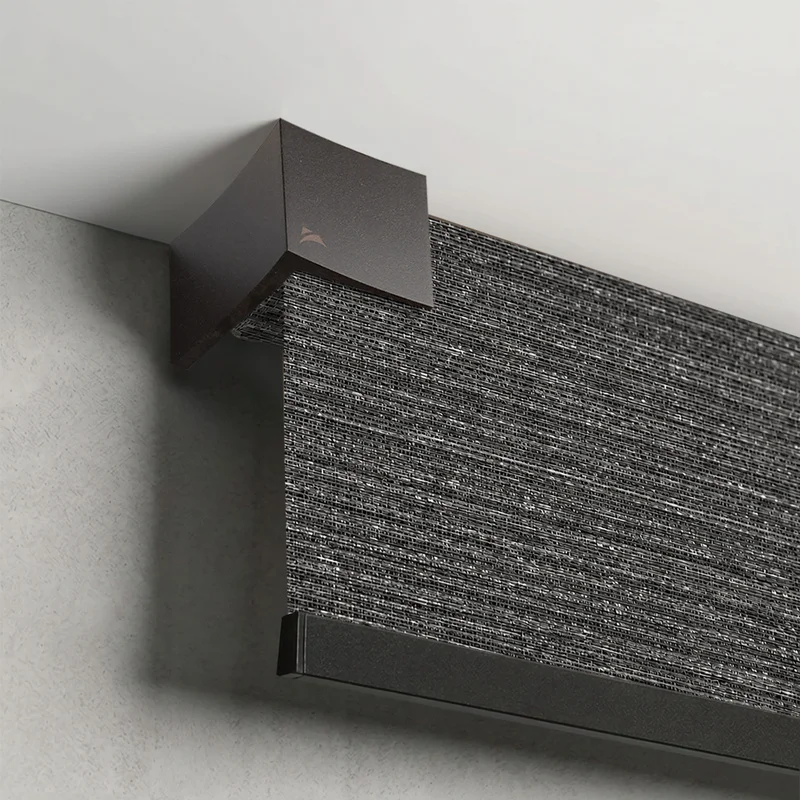
A very dark, matt tone with lighter flecks and brown hints that set it apart from a solid black. It pairs with the darkest fabrics in the range, from the Granite Grey of Earth and Brush to the Midnight Black of Diamond.
RECOMMENDED PAIRINGS
The Centro Stile Maanta, our in-house style office in Italy, chose the bracket colours starting from the fabrics, so that they work together. For each fabric it already suggests the recommended brackets: in the configurator they're marked with a heart. Below you can see them all, starting from the fabric or from the bracket.


OPERATION
You can choose between manual operation, with a chain, and a battery motor. If you choose the chain, you can motorise the blind later on.

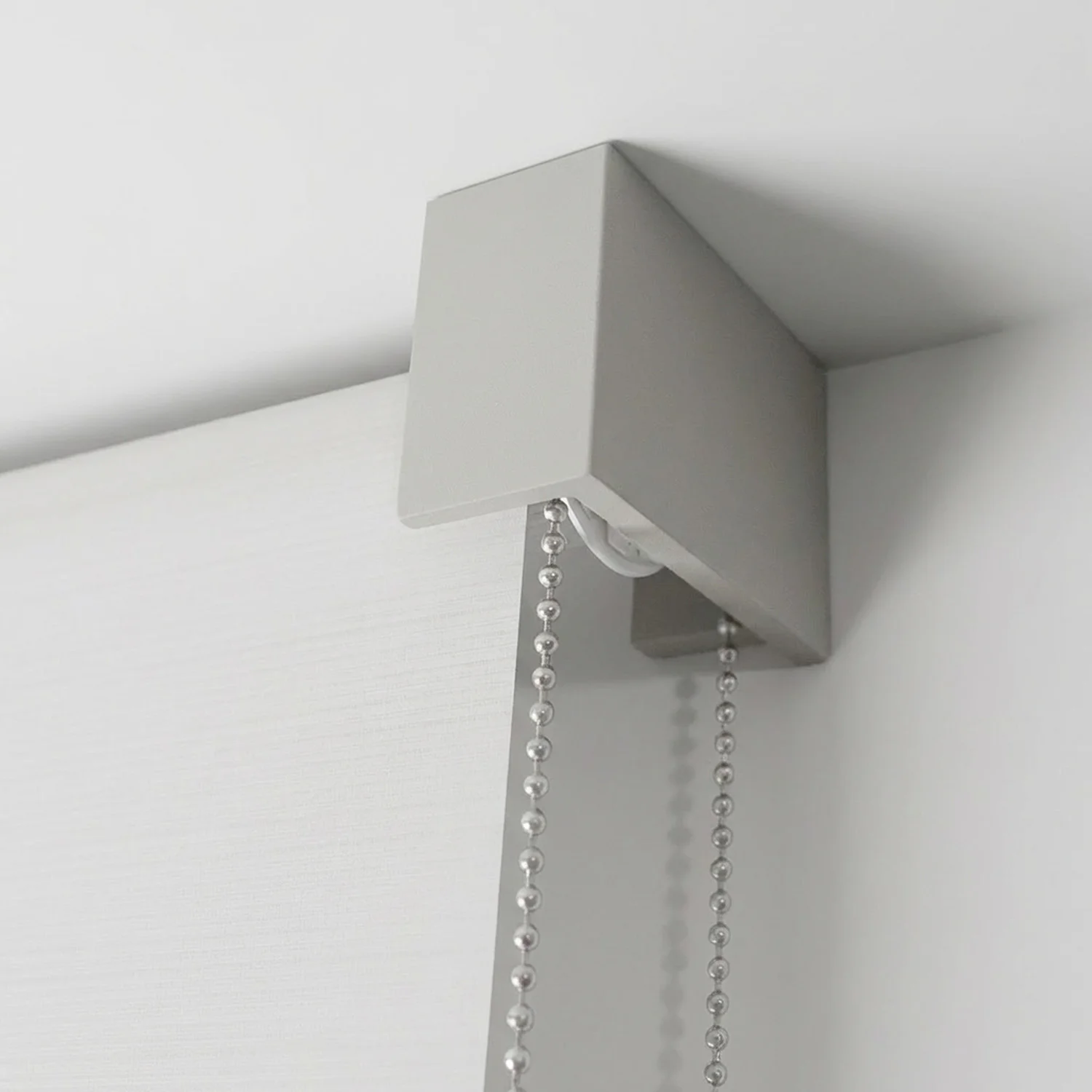
Chain-operated blind

Chain-operated blind
Safety rules apply
The chain is only available if you fit the blind at least 200 cm off the floor: it's a child safety rule. Any lower, choose the motor.

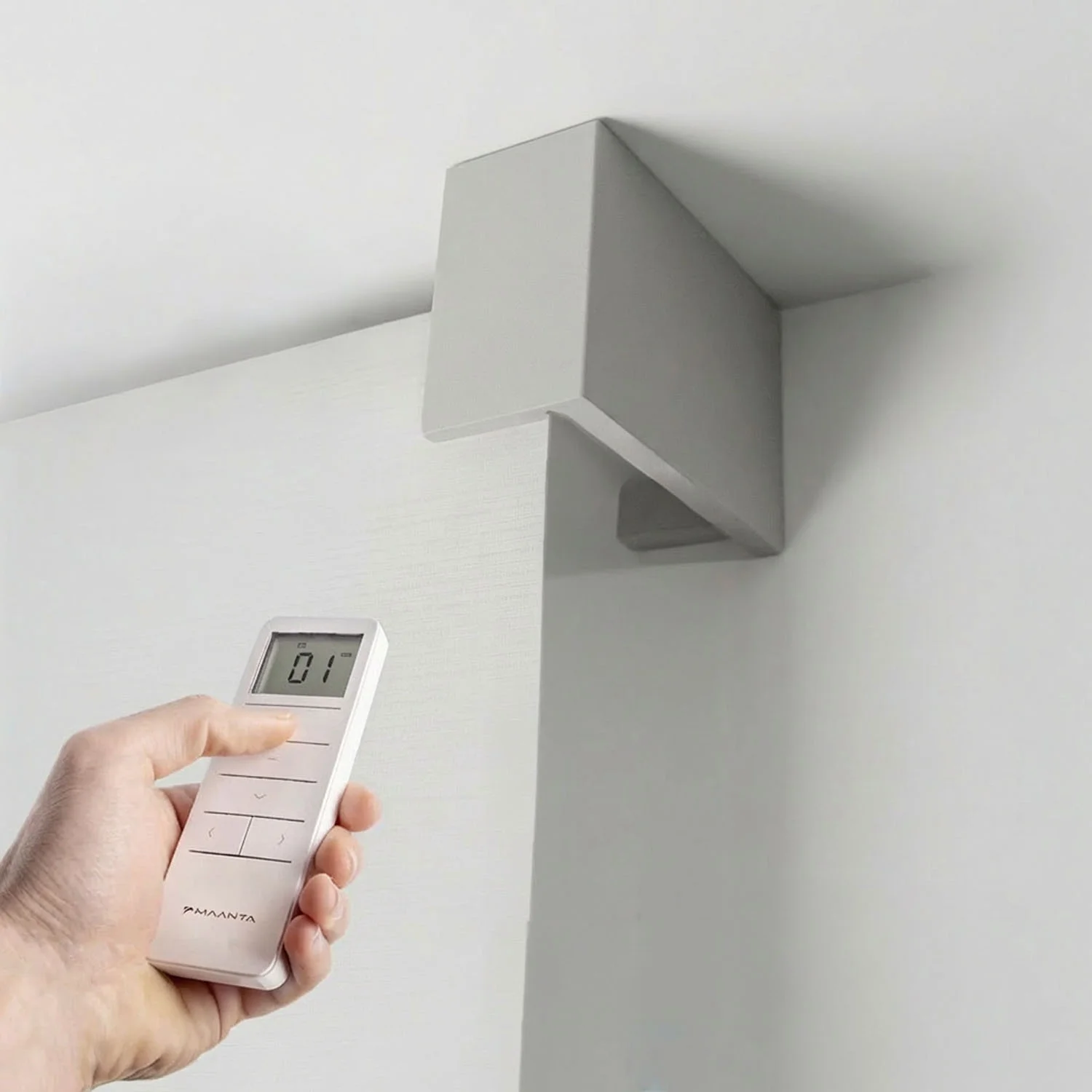
Motorised blind with remote control

Motorised blind with remote control
Power adapter not included
The motor comes with a USB-C cable, not a plug adapter. Any standard 5 V USB-C adapter will do.
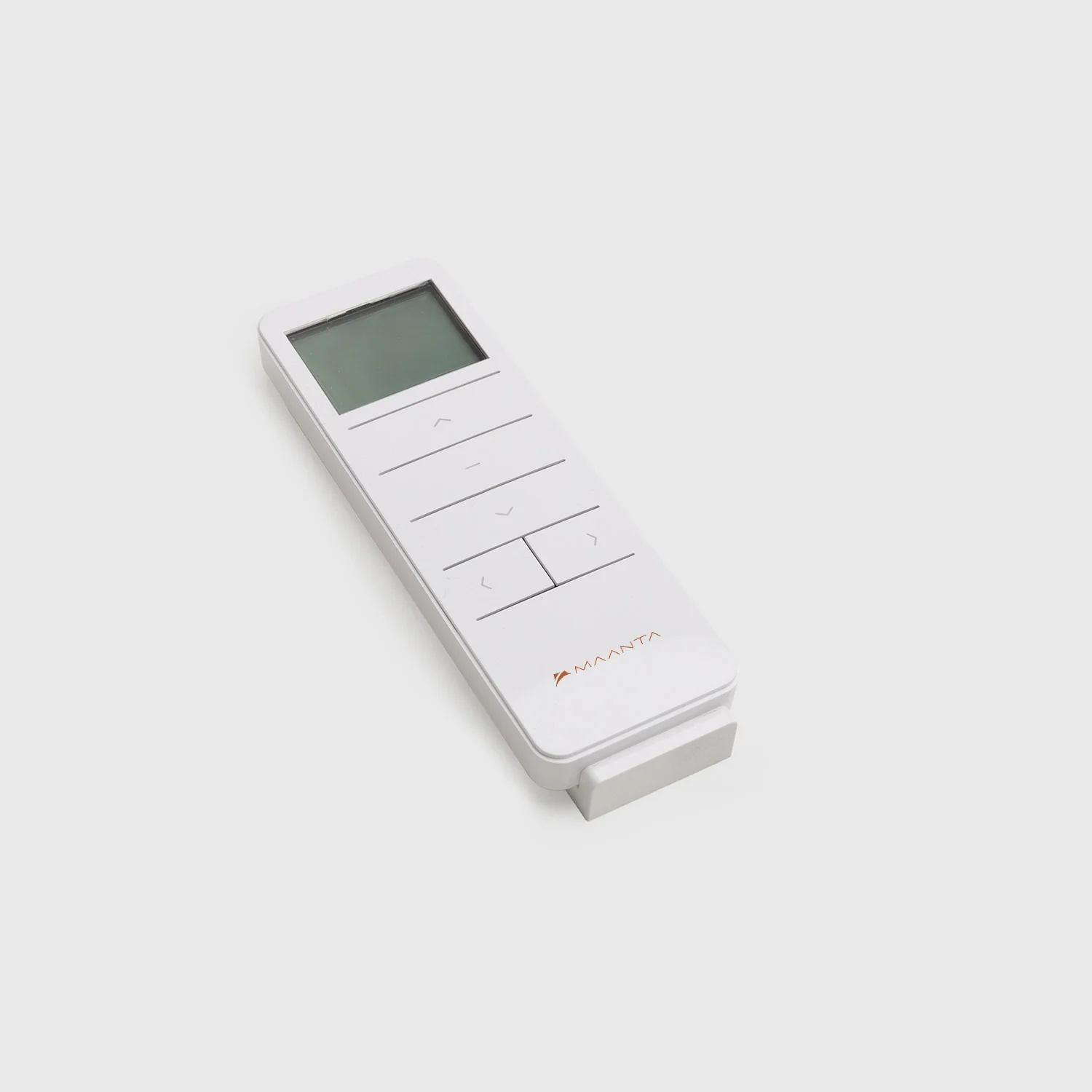
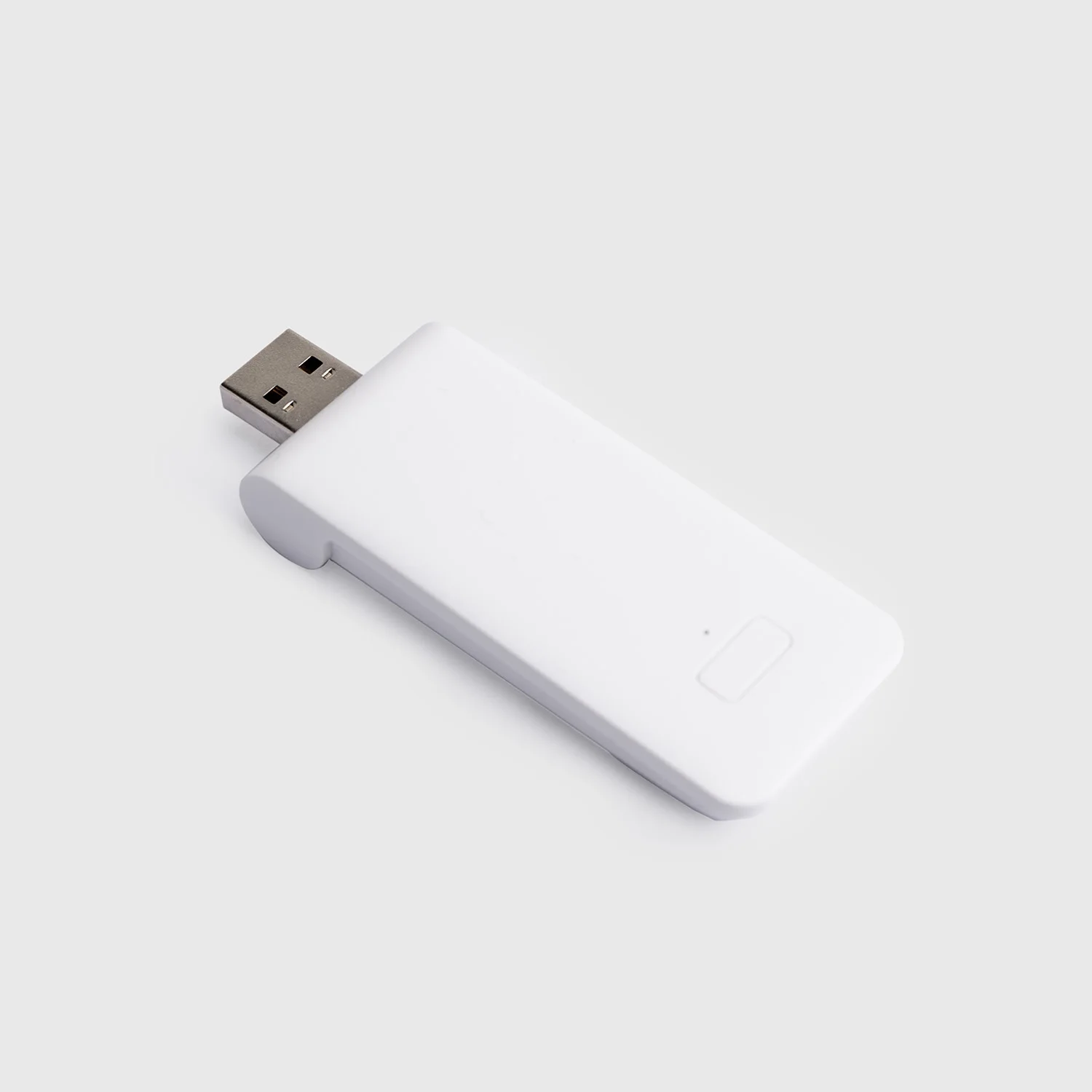
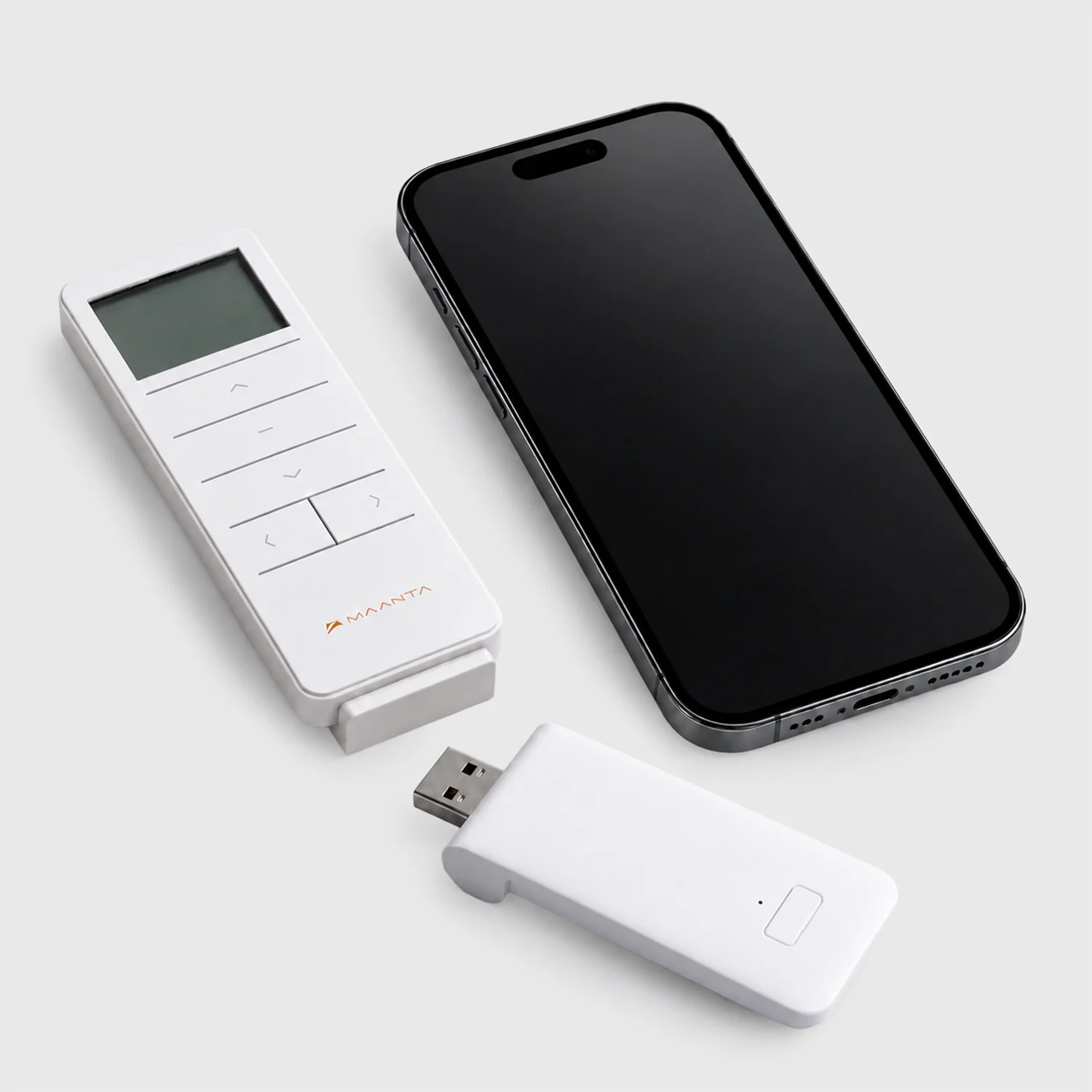
The motor can't be operated on its own: to control it you need the remote control, the Wi-Fi Bridge or both.

The multi-channel remote comes already paired with the motor and controls up to 15 blinds. It works by radio, with no Wi-Fi and no app.
Right for you if you operate the blind from inside the room.

It connects to your home router and lets you control the blind from the smartphone app and by voice with Alexa and Google Home.
Right for you if you already have a voice assistant or want to manage your blinds from your phone.

Use the remote when you're in the room, and the app or your voice when you're elsewhere in the house or have your hands full.
Right for you if several people in your household use the blind, with different habits.
If you configure a motorised blind, you choose whether to add the remote control, the WiFi Bridge or both; if you already have them for other Maanta blinds, you can leave them out.
PRICING
The price of Kyma and Recta depends on two choices: the size of the blind and the operation.
The price of your blind includes the assembled blind, the bracket in the colour and width you choose with a matching bottom bar, your chosen operation and the fitting kit.
A motorised blind costs around £139 more than a manual one.
Below you'll find three examples for the most common windows. You'll see the exact price of your blind in the configurator as you build it.
Fabric, colours and bracket don't change the price
For the same size and operation, the blind costs the same with any fabric, any colour and with the Standard or Slim bracket.
| Window | Size (W × H) | With chain | With motor |
|---|---|---|---|
| Double casement window | 120 × 140 cm | £340 | £479 |
| Single French door | 90 × 220 cm | £367 | £506 |
| Sliding patio door | 250 × 240 cm | £474 | £613 |
Prices include VAT. The “With motor” column includes the motor and remote control. You'll see the exact price of your blind in the configurator.
MEASURING
If Kyma or Recta is right for you, before configuring you'll need your window measurements. The blinds are made to measure from 60 to 280 cm finished width, brackets included, and from 30 to 300 cm in height.
In the configurator you can enter either the fabric width or the finished width, brackets included. How to measure them is explained step by step in the measuring guide.
TOPIC (ADD ONE FOR EACH SECTION OF THE GUIDE)
No, they're indoor blinds: they control light and privacy inside your home. If you want to stop the sun before it hits the glass, consider outdoor roller shades.
Yes. Blackout fabric blocks all light, whatever the colour.
Almost. The fabric blocks all light, but a few rays can slip through the gap between the fabric and the window. To reduce this, fit the blind as close to the window as possible.
It depends on the fabric family. With a blackout fabric, no; with a sheer, yes, when the lights are on inside. With light-filtering fabrics, it varies by range: Earth doesn't let people see through, while Fine Line lets the most show through.
Yes. You can order fabric samples and try them at your window, so you can see the colour and the light in your own room.
Satin, with a Tv of 45% to 49%. It's the brightest fabric we offer.
Yes. Fabrics, sizes and operating options are the same: only the shape of the plate changes.
Yes. The plate has two attachment points, on the back and on top, and the same plate works for both wall and ceiling fitting.
No. Both widths have the same structure and the same strength: the only difference is how much of the plate shows.
Start with the fabric. Centro Stile Maanta – our in-house style office in Italy – recommends plates for each fabric, and you'll find them marked with a heart in the configurator.
Yes. If you choose the chain, you can buy the motor later in the Accessories category.
It's a child safety rule. If you fit the blind lower than 200 cm from the floor, choose the motor.
No. You get the USB-C cable, but not the plug adapter. Any standard 5V USB-C adapter will work.
No. The price depends on the blind's size and how it's operated: it costs more with the motor than with the chain.
It's up to you. In the configurator, you choose which of the two measurements you're entering, and you'll see the final width with the plates straight away.
It's visible light transmission: the percentage of light that passes through the fabric. At 0% Tv, no light gets in.